
A FILETTA : Discography
You are here : Music / Corsican singing / A Filetta / Discography
The
complete discography of A
Filetta,
from the most recent to the oldest.
See also the vidéos at the bottom of the page.
2026 : Clair-Obscur
2023 : I Balconi
2017 : Danse Mémoire Danse
2015 : Castelli
2013 : Puz/zle
2012 : Pè a scusa
2011 : Di Corsica riposu - Requiem pour deux regards
2011 : Mistico mediterraneo
2009 : Trent'anni pocu, trent'anni assai (DVD)
2008 : Bracana
2006 : Medea
2005 : Liberata
2003 : Si di mè
2002 : A Filetta, voix corses (DVD)
2002 : Intantu
2001 : Le Peuple migrateur (Original soundtrack, see also the page dedicated to Bruno Coulais)
2000 : Le Libertin (Original soundtrack by Bruno Coulais)
2000 : Comme un aimant (Original soundtrack by Bruno Coulais)
1999 : Himalaya : L'Enfance d'un chef (Original soundtrack by Bruno Coulais)
1998 : Don Juan ((Original soundtrack by Bruno Coulais)
1997 : Passione
1995 : A Filetta en concert (VHS)
1994 : Una tarra ci hè
1992 : Ab'eternu
1989 : A u visu di tanti
1987 : Sonnii Zitillini
1987 : In l'abbriu di e stagioni
1984 : Cun tè
1982 : O'Vita
1981 : Machja n’avemu un altra

Clair-Obscur
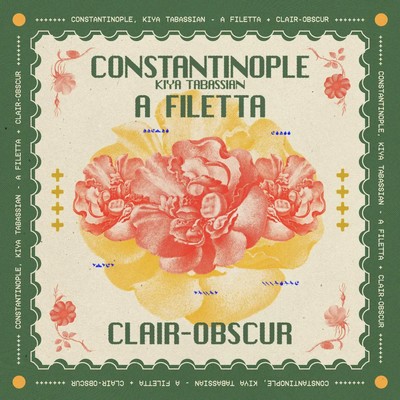
Absilone 3770001243146
Finally available on record is this beautiful encounter between Constantinople (Kiya Tabassian—setar, vocals; Didem Basar—kanun; Patrick Graham—percussion; and Tanya LaPerrière—baroque violin and viola d’amore) and A Filetta—a collaboration we witnessed during several concerts in Calvi in 2021 and 2025, as well as in Paris in February 2023.
The album is structured as a continuous poetic and musical suite consisting of 12 pieces. It takes the listener on a journey between sacred and secular songs, blending texts by Seneca or Primo Levi with those of the 14th-century Persian poet Hafez of Shiraz—whose writings celebrate spiritual love, mystical intoxication, and the quest for the absolute—all centered on themes of exile, love, memory, and hope.
Far from a mere layering of existing themes, the two ensembles have engaged in a process of mutual convergence: the voices of A Filetta embrace the inflections of Persian musical modes, while Kiya Tabassian’s setar adapts its phrasing to the melismas characteristic of Corsican tradition. As Jean-Claude puts it, “We deconstruct something that already exists, and then reconstruct it by integrating the other.”
01 - Storia
"Ognunu porta altu u so nome". This opening track begins with a very stripped-back instrumental introduction featuring Kiya’s setar and Didem Başar’s kanun. The voices of A Filetta enter in an almost whispered tone before gradually gaining in intensity. The increasingly rapid vocals and the instruments intertwine beautifully, eventually subsiding into a calmer state.
02 - Senza Tè
It is, in fact, a reworking of *Letterella*, with the rhythm bolstered by Patrick Graham’s subtle percussion and the ethereal lines of the viola d’amore. The piece then transitions into *Bito* (Rumi)—featuring Kiya’s melancholic Persian vocals—before the two melodies intertwine.
03 - Bangu-E Boland
We recognize *U Furore* from *Medea*, introduced by Petru Antò and accompanied by Persian instruments, followed by Saram khoshast by Hafez. This piece perfectly encapsulates the project’s concept of "vocal chiaroscuro."
The instrumental line of the baroque violin engages in dialogue—either in unison or through direct counterpoint—with the kanun played by Didem Başar and the setar played by Kiya.
04 - Oxymore 05 - Payâm ("The Message") by Rumi is a grand, contemplative fresco. The piece unfolds through a long, gentle instrumental and vocal dialogue—evoking the sky and the sea for the Corsicans, and day and night for Kiya.
Tanya LaPerrière’s viola d’amore envelops Kiya Tabassian’s singing in an admirable, melancholic sweetness.
06 - L'Abbriu (The momentum) 07 - Bad-E Zaman 08 - Lame Pigeon is an instrumental piece composed by Didem Başar,
to which lyrics by Jean-Claude Acquaviva have been added. 09 - L'Anghjuli (The Angels) 10 - At the Dawn of a Forest
11 - U Lamentu di Ghjesù
12 - Strade Ceche (Blind Roads)
A few details regarding the instruments used:
Played by Kiya Tabassian, the setar is a long-necked Persian lute with four strings. Its sound is refined, delicate, and highly expressive. It mimics the inflections and whispers of the human voice, fostering an atmosphere conducive to poetic intimacy (notably when accompanying the texts of Hafez). It introduces a profoundly introspective and spiritual dimension.
The kanun is a large, trapezoidal zither with 78 strings. Quebec-based musician Tanya LaPerrière serves as a pivotal instrumental bridge, performing on two bowed string instruments: the baroque violin and the viola d’amore.
Introductory text from the Constantinople website: Between sea and mountains, modality and polyphony, *Clair-obscur* (“Chiaroscuro”) was born from a desire for a profound dialogue between the musicians of Constantinople and the singers of A Filetta—the preeminent ensemble for Corsican polyphonic singing. A poetic and musical suite was conceived, interweaving the polyphonies crafted by the erudite singers of A Filetta with songs and music composed and orchestrated by Kiya Tabassian. The result is a deeply moving concert. This bold alliance draws from two distinct cultural landscapes—two living sources separated by geography. On one hand, there is the insular beauty of Corsica—austere, powerful, and rooted in land, sky, and sea—expressed through polyphonic songs that shift between melancholy and celebration. On the other, there is the refinement of the Persian musical and poetic tradition, which has long shaped the aesthetic landscape of the East. While these musical traditions share a foundation in modal expression, it is their profoundly contemporary language that the vocal sextet and the Montreal-based quartet sought to bring together. “To avoid the pitfalls of mere juxtaposition... to reach a new space through listening to and understanding the ‘Other’... to create a fresco that is perceived as a single, unified work”—this is the ambition pursued by these exploratory artists, who possess an innate and undeniable sense of harmony. From this collaboration, nurtured over the years, have emerged sacred and secular songs with exquisite accompaniment, revitalized laments and *folias*, as well as entirely new, co-created works. * * * On September 25, 2026, the Corsican group A Filetta and the Montreal-based ensemble Constantinople—led by Kiya Tabassian—will release a collaborative album titled Clair-obscur. Born from a dialogue that began in 2021, the record features twelve pieces that blend Corsican polyphony, Persian modes, improvisation, and poetry. It is a collaboration that goes beyond mere cross-pollination, forging a distinct musical language of its own. Clair-obscur: A Filetta and Constantinople forge a shared musical language This is one of the most unique encounters to emerge on the world music scene in recent years. Born from a dialogue initiated in 2021, Clair-obscur brings together A Filetta—an iconic ensemble for Corsican polyphonic singing—and Constantinople, a Montreal-based group dedicated to early and contemporary music. Far from a simple juxtaposition of two traditions, the album’s twelve tracks construct a shared sonic grammar, where Corsica and the Eastern Mediterranean meet on common ground. The release arrives just days after the *Rencontres de Chants Polyphoniques de Calvi* (Calvi Polyphonic Singing Encounters), a cornerstone event on the island’s cultural calendar. A Filetta and Constantinople: The album Clair-obscur—a meeting of Corsican polyphony and Persian music Clair-obscur is not a "fusion" album in the conventional sense of the term.
A long instrumental introduction opens this piece, which incorporates elements from Noi nò — from Orlando Forioso’s
A long instrumental part (Parfaz) introduces Meditate by Primo Levi.
We regognize the drone of U Sipolcru ; The instruments take over, then comes Kiya's singing on Saman Bouyan by Hafez.
The "lame pigeon" (injured pigeon) of the title evokes human vulnerability in the face of life’s challenges, while still retaining the capacity to rise.
Here, Rex is supported by the crystalline vibrations of the kanun before merging into
Malaek.
A highly poetic instrumental piece evoking nature.
A reinterpretation of the famous Lamentu in a new version: Jean-Claude begins the song in a low, slow voice,
then the singing grows increasingly dramatic, supported by the choir.
The "Perdono mio Dio" intertwines with the ornamentation of the baroque violin, and in the final verse, Jean-Claude’s heart-wrenching voice engages with the violin in an absolutely masterful apotheosis.
Longtime fans might prefer the stripped-back version heard at the most recent Rencontres de Calvi, but both versions are devastatingly beautiful.
Roads without a horizon still lead to hope...
The setar opens the pieces with improvisational passages that establish the emotional framework before the Corsican choir enters.
Its rapid plucking techniques provide a subtle pulse that sustains the dramatic tension of the poems without ever overpowering the voice.
With its extensive range, the kanun provides a rich sonic foundation. Its arpeggios and cascading notes envelop the voices of A Filetta, creating a luminous texture reminiscent of flowing water.
The qanun features small levers that allow for the adjustment of string tension, even while a piece is being played. This enables an instantaneous transition from the scales used in Persian music to Western harmonies.
The viola d’amore is a unique baroque instrument that, in addition to its bowed strings, features metal sympathetic strings located just beneath the fingerboard. These strings vibrate through acoustic resonance without ever being touched, creating an aural halo—a natural, exceptionally warm reverberation.
This resonance is reminiscent of the vocal drones found in Corsican singing, while also evoking the harmonics characteristic of Eastern instruments.

"Clair-obscur": An unexpected album bringing together Corsican polyphony from A Filetta and Persian music from Constantinople, arriving in September 2026
Twelve pieces weaving together Persian modes, improvisation, and poetry
Article written by Julie
Date of publication : 2026/09/09.
Source : https://www.jds.fr

When A Filetta Meets Constantinople on "Clair-obscur"
A Filetta has joined forces with the Montreal-based ensemble Constantinople for an extraordinary project: Clair-obscur, an album that brings together Corsican polyphony and Persian music, set for release on September 25, 2026. It promises a striking encounter between distinct timbres, languages, and traditions.
Featuring the single Senza tè—available since September 6, 2026—Clair-obscur creates a dialogue between six Corsican voices, the setar and vocals of Kiya Tabassian, the kanun, the baroque violin, the viola d’amore, and percussion, all breathing as one.
An album conceived as a continuous journey
More than just a collaboration, Clair-obscur is designed as a poetic and musical suite consisting of twelve pieces. Sacred songs intersect with secular ones, laments respond to *folias*, and original compositions weave the whole together.
Moving from one track to the next, the listener travels between Corsican and Persian, from Seneca to the poet Hafez, all connected by a common thread: texts that explore love, exile, memory, violence, and hope. The voices of A Filetta are not simply layered “on top” of Constantinople’s instrumentation; they truly immerse themselves in Persian modes and their characteristic inflections.
Conversely, Kiya Tabassian’s setar adapts its phrasing in response to Corsican melismas and their unique resonances. It is from this interplay—this act of mutual listening—that there emerges what the artists describe as a “third voice”: one that is organic and decidedly contemporary.
A Filetta and Constantinople: Two Intersecting Stories
Founded in the Balagne region of Corsica in 1978, A Filetta has transformed Corsican polyphony into a rich field for experimentation. For a long time now, the sextet has gone well beyond the traditional repertoire, building bridges with cinema, theater, dance, and jazz—all while garnering numerous awards, including several *Diapasons d’Or*.
Meanwhile, Kiya Tabassian arrived in Montreal from Iran at the age of 14. A composer, singer, and master of the *setar*, he founded the ensemble Constantinople in 2001. The group draws inspiration from Persian and Mediterranean traditions, as well as from both ancient manuscripts and contemporary compositions.
With twenty-six albums to their credit and a 2024 Juno Award for *Il ponte di Leonardo*, Constantinople has established itself as a major name in world music. Their collaboration with A Filetta extends this ongoing quest for dialogue—one that reaches far beyond superficial, "postcard-style" representations.
On the album "Clair-obscur", the music plays with contrasts: the collective power of Corsican polyphony, the fluid nature of Persian modes, the space carved out for improvisation, and the interplay between different languages and eras. All of this is framed by an aesthetic that embraces both deep-rooted heritage and the living, breathing present moment.
The album will be released on September 25, 2026, with "Senza tè" serving as the initial gateway into this collaboration between A Filetta and Constantinople. It’s the kind of music that invites you to listen first with headphones, and then at a more generous volume, to truly appreciate the craftsmanship behind the timbres and the spatial textures.
And to extend the experience live, the *Clair-obscur* project will take the stage at the Collège des Bernardins in Paris on November 6, 2026, as part of the *Festival Villes des musiques du monde*. It promises to be the perfect opportunity to gauge—in a real-world setting—the power of this encounter between Corsican polyphony and Persian music.
Source : https://www.pozzo-live.com/

“Clair-obscur” marks the encounter between A Filetta and Constantinople—a musical dialogue between the Corsican vocal ensemble, renowned across the globe, and the musical group led by Kiya Tabassian, a cosmopolitan melting pot of the most intense kind.
Polyphony intertwines with the “fluidity of the Persian worlds.” These realms intersect miraculously at the heart of an exchange that transcends both time and borders. From Corsican to Persian, the pieces journey from one light to another—weaving together different poetic traditions into a single, unified tapestry, infinitely enriched by its own migrations.
Neither tradition takes precedence; rather, each enriches the other. The poetry of Persian music—an art form deeply devoted to sophisticated structures—merges with the powerful, soaring spirit of a Corsica that manifests here as a collective song.
This fusion is striking in its presence and transcendence. Improvisation weaves through the precise, meticulously crafted threads of the music. This movement—reflecting the world, its peoples, and its languages, which have interacted since the dawn of time—gives rise to sublime landscapes, nourished by the very lands through which they have traveled. It is a vital cross-pollination, one that opens up new horizons and aesthetics that are as desirable as they are essential.
Source : https://www.indiepoprock.fr/
I Balconi

First review from L'Invitu after a few listens:
1 - Valentina (Marcellu Acquaviva - Jean-Claude Acquaviva)
A modest and delicate text—sung by Jean-Claude—that evokes the memory of Valentina, who passed away at the age of 25. It is a text that speaks of chaos and the sun’s eternal journey, and of the hope that pain and suffering might one day lead to a sense of peace.
2 - Scarsa (Jean-Claude Acquaviva)
Paul begins the song, soon joined by Petr'Antò and then by the other singers. "Rare and spring-like, the first star awakens..."
3 - Caprunale (Petru Santucci - Jean-Claude Acquaviva)
A beautiful guitar intro then the voice of François to evoke the Caprunale pass, stage of the transhumance between Falasorma and Niolu.
A sequel to In Muntagnera!
4 - M'innamuru (Jean-Claude Acquaviva)
A very beautiful love song in the form of a dialogue between Paul and Petru Antò. Magnificent!
5 - Quallà (Marcellu Acquaviva - Jean-Claude Acquaviva)
A theater of conquests, a route for the heroes of Rome, Carthage, and Genoa—the Mediterranean has, alas, become the grim setting for a most sinister odyssey…
Petru Antò sings of the Mediterranean—a sea steeped in history, yet also a graveyard for migrants. "Over there is here."
The writing is exquisite, reminiscent of Laurent Gaudé—who, in addition to providing the preface, has contributed three fine pieces for the album sleeve: "A nos noces," "Le fils de loin," and "Le pacte."
6 - Prelume (A Dora) (Marcellu Acquaviva - Jean-Claude Acquaviva)
In a way, echoing "Valentina," this "premonition" sung by François evokes the boundary between the living and that which is no longer alive.
A very gentle song with a subtle vocal arrangement.
7 - A' fà ci virtù (Jean-Claude Acquaviva)
The catchiest track on the record. "You are the other me, and I am the other you." We get to enjoy Jean-Do’s beautiful vocal tone.
8 - U saltere (Marcellu Acquaviva - Jean-Claude Acquaviva)
A text which says what was done and what was desired, which confronts us with our common destiny, which invites us to inevitable resilience and
hope nonetheless: "Sarà bughju maiò voltu l’eternità, ma qualchì luce sempre ti darà(nu) un alloghju..." (It will be a great darkness, stretching toward eternity, but some light will always offer you a shelter.)
At the hour of your death, the engraved alphabet à the entrance to the tomb will make you reconstruct the book of your life, sings Jean-Claude.
9 - U cecu di Buenos Aires (Marcellu Acquaviva - Jean-Claude Acquaviva)
Dedicated to Jorge Luis Borges—revered by both authors, Marcellu and Jean-Claude—this piece opens with the voice of Maxime, soon joined by Paul and the others.
The themes cherished by the Argentine writer are all present: Homer, Argentina, mirrors, the labyrinth, the library, time...
10 - A' a sbunurata (Marcellu Acquaviva - Jean-Claude Acquaviva)
The harmony of nature at sunrise, as sung by Petru Antò.
11 - A vuciata (Marcellu Acquaviva - Jean-Claude Acquaviva)
Rumors swirl and dance about... constantly renewing themselves! A tune sung by Jean-Claude, with some jazzy interjections from the vocalists.
12 - Sponde vele (Jean-Claude Acquaviva)
This text about Cap Corse was written by Jean-Claude; it is sung by Jean-Do, with Petru Antò concluding on the lines "Sponde vele, Belle l'onde."
This record is dedicated to the memory of Antò Chauvy-Acquaviva and Antò Sicurani—"our stars from the Balagne region."
To begin with, why this title? "Balconi" (balconies) are open spaces looking outward, from which one discovers that one is not alone.
It may also be because the first track, Valentina, begins with the line: "U ghjornu hè per scalà à i vechji balconi" ("The day is for climbing up to the old balconies").
In the spring of 2020, the lockdown brought a halt to travel, concerts, and rehearsals. This provided an opportunity for the group to develop the musical project I Balconi.
Jean-Claude had long envisioned an album focused on songs—for in polyphonic singing, the lyrics can sometimes be difficult to follow, as they are fragmented across the various vocal parts.
In I Balconi, polyphony is present in a subtle way, with the voices serving the lyrics. A single guitar—featuring carefully crafted yet stripped-back arrangements—helps give the work the structure of a song-based album. As a result, one can all the better appreciate the magnificent lyrics by the two brothers, Marcellu and Jean-Claude, as well as those by Petru Santucci (Caprunale).
These are lyrics that speak to our shared humanity: love, death, resilience, our history, our utopias...
Perhaps less immediately accessible than *Una Tarra c'Hè*, this record is imbued with a sense of gravity, yet it is entirely devoid of sadness.
It has the great merit of showcasing the voices of the group’s two most recent members, Petr'Antò and Jean-Do—not to mention François, who was already featured on "Danse Mémoire Danse".
As is often the case with A Filetta, each subsequent listen allows you to appreciate every track even more—especially the highly subtle vocal arrangements. As you might have gathered, this record is a daily companion of mine!
A first article in "Le Journal de la Corse":
A Filetta : « I Balconi » by vu
The latest album from the renowned group A Filetta is being released early this week. It features twelve tracks covering a variety of themes, six voices, new material, and a guitar…
Highly anticipated within the world of Corsican singing, "I Balconi"—the new album by the group A Filetta—is set for release early this week. The concept originated during the health crisis. "It was a time of great anxiety," explains Ghjuvan Claudiu Acquaviva, the group's leader. "We worked on new songs without knowing—to be honest—what would ultimately come of them. The chosen themes revolve around love and various issues concerning contemporary society."
A Musical Journey
"I balconi" consists of twelve tracks with a unique feature. While the group’s polyphonic voices are still present, they are accompanied by a single guitar, played in a rather classical style. "A specific intention," adds the group's leader, "emerged quite naturally. This is the first time since 'Una tarra ci hè'—released in 1994—that we have included this instrument. I might also add that there is a resemblance to the guitar used on that album."
From "Valentina"—which recounts the journey of a young woman taken too soon—to "Caprunale," and passing through "Quallà" and "I balconi," the album serves as an invitation to a musical journey, consistently showcasing the group's creative flair and artistic quality since its very beginnings. As for the lineup itself, it has undergone some changes. "Seventy singers have passed through the group since *Machja n’avemu un’altra* in 1981," adds Ghjuvan Claudiu Acquaviva. "Some stayed for only a few weeks or months, others for many years, but the spirit of the group has always remained the same."
A six-member lineup
A group that, following the album *Una tarra ci hè*, chose to focus on polyphony—creating an alchemy between traditional styles and a more modern form of polyphony rooted in ancient songs—is composed today of six singers. Some of the older members, such as Ghjuvan Lucca Geronimi and Ghjuvanni Sicurani, have decided to "pass the torch." Others have since joined (Francè Aragni in 2013, Petru Antò Casta in 2019, and Ghjuvan Dumenicu Bianco in 2019). Ghjuvan Claudiu Acquaviva, Paulu Giansily, and Massimu Vuillamier are the members who remain from the original lineup. "We have six voices, but our primary aim is to sing in four or five musical parts..."
A performance coming next spring
Within this alchemy, one finds songs such as "Sumiglia" (dating back to the nineties), "Kyrie," or "Sub Tuum" (from the 2000s)—all deeply rooted in tradition. Other pieces, like "A paghjella di l’impiccati," have contributed to the group's renown. With "I Balconi," the ensemble introduces an instrument, yet the voices remain true to the style of traditional polyphony. A Filetta has been touring with this new record, preparing a show for next spring. In the meantime, the group will perform in Calvi on October 15th. It is an opportunity—perhaps before they embark on a worldwide tour—to hear these magnificent voices that transport us beyond mere notes or music, leading us toward a spiritual dimension…
Ph.P.
And an article from Corse Matin:
A Filetta, the new album of a perpetual tradition
Jean-François Pacelli jfpacelli@corsematin.com
Published on 17/10/23
.jpg)
The group from Balagna had not released any new material since "Castelli" in 2015. With the 12 songs on "I Balconi," they return to their roots, scaling back the polyphony in favor of song-based tracks, and—most importantly—giving a voice to the younger generation, in a spirit of passing on their tradition.
To mark its 45th anniversary, the Balagne-based group A Filetta has released a new album, I Balconi, which was previewed at the Polyphonic Singing Encounters in Calvi. Eight years after the release of their previous work, Castelli, the ensemble led by Jean-Claude Acquaviva returns to its roots—or, more precisely, returns to the songs themselves. With only a single guitar for accompaniment, the six-part polyphony is intentionally understated to allow the lyrics to take center stage.
"In polyphonic singing, the text is fragmented across the various voices—a point that authors sometimes reproach us for," notes Jean-Claude Acquaviva. "They’re right; the lyrics can be difficult to hear behind the polyphony. On I Balconi, we are singing the text more than we are singing polyphony; the vocal arrangements are quite subtle. It’s a return to simplicity—a stripping away of the superfluous. The question now is how it will translate to the stage; that remains to be seen. Will the audience, who have known us for 30 years through our polyphonic repertoire, embrace this new direction?"
In the spring of 2020, the health crisis brought an end to travel, concerts, and rehearsals. During the lockdown—even while working remotely—the group found the time to fully develop the musical vision for I Balconi.
Its twelve songs written by Marcel Acquaviva, Jean-Claude Acquaviva and Pierrot Santucci, evoke otherness, the contemplative, Cap Corsica and its marine park, love, Argentine poetry, rumor, or even transhumance by Caprunale."I Balconi—balconies—are extensions of our homes where we are simultaneously in our own private space and connected to the outside world," explains Jean-Claude Acquaviva. "When we were in lockdown, deprived of our freedom, our balconies allowed us to talk with our neighbors and to sing. For us, they represent a return to fresh air, light, and contact with others. We found it compelling to embrace this concept of a journey from darkness into light."
Passing on a Vocal Culture
A Filetta’s new album echoes their works from the 1980s, featuring iconic songs such as *A Muntagnera* and *Le Pagliaghju d’Ostriconi*. At the time, recording albums of polyphonic music was a bold—and innovative—undertaking. It was through this repertoire that A Filetta built its international success, beginning in 1989.
Since the group’s formation in 1978, around sixty singers have been part of A Filetta.
Some stayed for only a few months, while others remain to this day. The collective has been enriched by the contributions of each individual, just as those individuals have been enriched by the group. Looking back over its 45-year history, the ensemble has served as a kind of school for Corsican singing, upholding the high standards and quality required in the professional sphere.

"It is important to renew oneself," says Jean-Claude Acquaviva. "This only reinforces the idea that A Filetta is an enduring entity. A Filetta has a life of its own—its own ambitions, dreams, and practices—and, over time, people pass through the group. Maxime, Paul, and I are approaching our sixties. It is also a great pleasure to see young people arrive who connect with this music. It is not always easy music; at times, it is intimate—not always spectacular or flashy. Seeing young people here is truly satisfying. It tells us that there are still those who will carry it forward and keep it alive." Jean-Dominique Bianco, from Bastia, is the last of the six members to have joined the group. He came on board thanks to the help of his friend Petru-Antò Casta, who has been part of the ensemble since 2017. For both men—now in their thirties—this album marks their debut.
""A Filetta was looking for a singer following the departure of Jean Sicurani," recounts Jean-Dominique Bianco. "At the time, I was in a duo with Jean-Vincent Servetto. I was already passionate about polyphonic singing, and having previously performed several of A Filetta’s songs, I jumped at the chance. I was welcomed in the most wonderful way. Everyone put me at ease; it all happened quite naturally."
A former civil servant in the territorial administration, Petru-Antò Casta continues to thoroughly enjoy his life as a professional singer. "Finally releasing an album is a joy I had never experienced before, despite having spent seven years with the group. My start with A Filetta came about following a Facebook post; the group was looking for a singer, and I was looking for a career change. I took the plunge, and I hope to keep doing this for as long as possible. You have to be available and committed, and you have to manage frequent travel—it’s not just all fun and games."
The longest-serving member among the younger generation is François Aragni, who has been with the ensemble for ten years: "I joined because Jean-Claude reached out to me; he knew I was a fan of A Filetta. He asked if I wanted to become part of the group—I was an electrician at the time—and I said, 'Why not give it a try?' I had already taken part in recording albums, notably with Vitalba, a group I had been a member of since its inception."
Solid foundations and fresh blood—this is how this musical group from the Balagne region keeps the tradition of Corsican singing alive, a tradition that has gained popularity well beyond the island’s borders. As long as this process of passing on the tradition continues, the future is secure.
Danse mémoire, danse

Produced by DEDA/A Filetta, Tǔk Music/Paolo Fresu et Daniele Di Bonaventura.
Preview release in Corsica: early July 2017
National and international release scheduled for the autumn of 2018
Bringing these two brilliant, humanistic thinkers together is, quite simply, a deliberate effort to reiterate—again and again—that behind the greatness of these men, whom we rightly celebrate for their commitments and sacrifices, lies the very ideal for which they lived and died: the vision of a world that is more just, freer, more respectful of differences, more equitable, and more rooted in solidarity.
We have asked contemporary Corsican authors to use their pens to... ...the confluence of the thought of those builders, Nicoli and Césaire, shedding light on their ideological, philosophical, and poetic journeys. Corsicans and Italians, polyphonic singers and jazz musicians—all artists deeply rooted in their own traditions—we—through voice, trumpet, and bandoneon—seek to highlight the ideals and dreams of these "princes of the clouds." We do so by offering a hybrid music that belongs to no one in particular, precisely because it belongs to everyone.
First review by L'Invitu :
We have had the good fortune to hear this new repertoire in concert on several occasions (in 2014 in Cologne and at the Rencontres de Calvi, then in 2016 in Le Mans and Rouen), and we were very eager to have a recording of it. That is now a reality for those in Corsica (or those who have friends there); the rest of the world will have to wait a little longer—about another year, if my information is correct!
First, a brief recap is in order: In October 2006, "L'Aghja"—a small theater in Ajaccio—celebrated its 20th anniversary. For the occasion, its director and stage manager, Francis Aiqui—a passionate jazz enthusiast—decided to bring together jazz musicians and Corsican polyphonic singers. This marked the meeting of the group A Filetta with Paolo Fresu, André Jaume, Daniele di Bonaventura, and Philippe Biondi—a true case of "love at first sight" that gave birth to the project *Mistico Mediterraneo*, featuring Paolo and Daniele. Following that success and dozens of concerts, the group decided to continue their journey together. This time, the result is a musical and vocal work titled *Danse, Mémoire, Danse*. It is also worth noting that Paolo and Daniele have continued their collaboration ever since, with their duo having recorded the album *In Maggiore*.
This new record, which bears as an epigraph the words of Primo Levi—"Se comprendere è impossibile, conoscere è necessario" ("If understanding is impossible, knowing is necessary")—marks a highly significant milestone in the group’s thirty-nine-year history.
Musically speaking, this represents more than just a meeting; it is, at last, the genuine collaborative creation we had hoped for following Mistico mediterraneo. Given the caliber of artists like Paolo Fresu and Daniele di Bonaventura, it was simply a matter of waiting for the right moment... The album features original compositions by Paolo Fresu, Daniele di Bonaventura, Jean-Michel Giannelli, and Jean-Claude Acquaviva, set to lyrics previously written by Marcellu Acquaviva, Jean-Yves Acquaviva, Ghjuvanteramu Rocchi, and Jean-Claude.
The lyrics, in fact, may never have been more important. This is a political record, in the noble sense of the term.
When presenting the album, Jean-Claude remarked, "My dream is for people to buy this record in order to read the lyrics." The thirteen sets of lyrics—which, through the lives of Jean Nicoli and Aimé Césaire, evoke the humanist and progressive values to which the band is deeply and viscerally committed—are magnificent.
1 - I vostri sguardi (Marcellu Acquaviva/Paolo Fresu)
From the very first track, the listener is lifted off the ground! A rumbling bandoneon introduces the voices, which reveal the "piercing gazes" of these two personalities; by the third verse, the atmosphere shifts with the arrival of Paolo’s "ethereal" contribution. Then, amidst a gentle syncopation between the voices and the trumpet, we leave the earth behind—the rhythm quickens, only to return to the initial theme. "Isulani, u mare ùn v'hà pussutu tene / In le rete di quelli ch'ùn sanu vede l'altru (Islanders, the sea could not hold you captive within the nets of those who cannot see the other)"...
These lines could well serve as an epigraph for the entire album.
2 - Quellu chì
(Marcellu Acquaviva/Jean-Michel Giannelli)
"He who had a dream", music by Jean-Michel Giannelli with a text by Marcellu Acquaviva, with beautiful instrumental passages by Paolo and Daniele after the 2nd verse and at the beginning. the end of the song.
3 - Sciume
(Jean-Claude Acquaviva/Jean-Michel Giannelli)
Paolo’s electronic effects, soon joined by voices, introduce *Sciume* (Foam)—evoking water, the ocean, islands, doubt, exile...
4 - U viandante
(Marcellu Acquaviva/Jean-Claude Acquaviva)
A highly rhythmic piece about "the wandering man," which allows both instrumentalists to really let loose toward the end. Never has Corsican polyphony swung quite like this!
5 - Da a pieve di Carbini (Marcellu Acquaviva/Daniele di Bonaventura)
A magnificent text, superbly delivered by Jean-Claude, evoking—from Carbini to the Black Americas—slavery and the massacre of those who dared to say no. And, in the end, hope...
6 - In sempiterna (Jean-Yves Acquaviva/Jean-Yves Acquaviva)
To his children, Jean Nicoli—executed on August 30, 1943, by the fascist occupiers—left these admirable words:
“To my children, I shall be leaving shortly. If only you knew how calm I am—almost happy—to die for Corsica and for the Party. Do not weep; smile for me. Be proud of your father. He knows you have reason to be: the Moor’s Head and the red flower—that is the only mourning I ask of you.
On the threshold of the grave, I tell you that the only idea on this poor earth that seems beautiful to me is the communist idea. I die for our Corsica and for my Party.”
Jean-Yves Acquaviva avoided mere paraphrasing, instead crafting a poem that captures the spirit of Nicoli’s letter. Paolo and Daniele provide a fitting setting for the vocals of François and the other singers in this poignant piece.
7 - A mio pena s'hè mondu (Jean-Claude Acquaviva/Daniele di Bonaventura)
Set to a composition by Daniele for the piano (his *Kyrie eleison*), this is a contemplative piece. Daniele adds a second layer on the bandoneón, and Paolo takes flight...
8 - Human (Paolo Fresu)
The only instrumental track on the record, a trumpet/bandoneón duet composed by Paolo.
9 - Vintera (Jean-Yves Acquaviva/Jean-Claude Acquaviva)
The sun after the storm—a beautiful piece about hope, set to a near-waltz rhythm and driven by Daniele’s bandoneón.
10 - Africa (Jean-Yves Acquaviva/Jean-Claude Acquaviva)
Stéphane introduces this beautiful song about Africa, "where all of humanity was born."
11 - Fiori d'Algeria (Ghjuvanteramu Rocchi/Paolo Fresu)
With reference to Jean Nicoli, Ghjuvanteramu Rocchi—who was himself a schoolteacher in Algeria—recalls, with extraordinary humanity, the years spent there, and a future in which "the children will celebrate friendship, joy, and song together with the children of Algeria."
12 - Un'antra isula (Jean-Yves Acquaviva/Daniele di Bonaventura)
A highly dynamic piece (Daniele’s *Tarantella d’autunno*) centered on two islands: one a paradise, the other defined by injustice and racism. Daniele is masterful on the bandoneón, with some fine exchanges with Paolo.
13 - Alba impedita (Jean-Claude Acquaviva/Daniele di Bonaventura)
A theme of extreme delicacy—recognizable as the instrumental *Corale* from *Mistico mediterraneo*—is introduced by the flugelhorn and bandoneon, then taken up by voices that intertwine. Such beauty!
14 - La costruzione delle cose (Jean-Claude Acquaviva/Paolo Fresu)
A striking track, with its almost lighthearted theme contrasting against the lyrics: "and to think that, not so long ago, war was raging here."
And with the words, "And to think that, had we been just, / The horror would never have come to pass," this luminous record draws to a close.
These initial impressions—formed after three listens—hardly scratch the surface, as there is so much more to be said about this exceptional album. It is worth highlighting, once again, the beauty of the lyrics (notably those by Marcellu Acquaviva) and the richness of the arrangements—in particular, the immense musical intelligence of Paolo and Daniele.
The review of "Il Giornale della Musica" (traduction)

A Filetta, Corsicans "privateers" with Fresu and Di Bonaventura
Danse Mémoire, Danse è the new record of the corsican ensemble corso A Filetta with Paolo Fresu and Daniele Di Bonaventura
“To tell stories—to keep telling them until no one dies anymore. A thousand and one nights, millions and one nights.”
So wrote Elias Canetti in his Book Against Death—an unfinished, epigrammatic, “disorderly,” and “minimal” work, eternally in the making. It was written for the dead—upon whom we all inevitably depend—in an attempt to save them, or at least to snatch them, for a few fleeting moments, from the ungrateful jaws of oblivion. It is a book composed, in large part, as a stand against the overbearing violence of power, which asserts itself by annihilating others.
Telling stories, remembering, and evoking the past are among the core objectives of this remarkable work, Danse Mémoire, Danse, by the extraordinary Corsican polyphonic vocal group A Filetta. Following their splendid and highly successful collaboration on Mistico Mediterraneo (ECM Records, 2011), they have reunited with the increasingly poetic and measured Paolo Fresu—who contributes trumpet, flugelhorn, and effects, while also serving as producer (his carefully calibrated brass instruments produce sounds that are lyrical, luminous, radiant, and almost science-fictional)—alongside the superb Daniele Di Bonaventura, who brings the rich, orchestral, and “mantric” (in a sense beyond the ancient art of divination) textures of his bandoneón to the project.
The first of the two is Aimé Césaire (1913–2008)—an extraordinary surrealist poet and playwright from Martinique, a Caribbean descendant of enslaved Africans, and a prominent politician. He was a member of the French Communist Party—which he left following the events in Hungary in 1956 (by which time the situation was clear enough to understand)—a deputy in the French National Assembly, and the mayor of Fort-de-France (the capital of Martinique) for nearly sixty years. It was thanks to him that, in 1946, Martinique became an overseas department of France, thereby becoming an integral part of Europe. He authored iconic plays and poems—most notably his 1939 work, Notebook of a Return to the Native Land—that chronicled the tragic fate and struggles of enslaved people in France’s overseas colonies. Furthermore, in the interwar period, together with the renowned Senegalese politician and intellectual Léopold Senghor (who would go on to become the first president of an independent Senegal)—whom he met at the École Normale Supérieure in Paris—he conceived the foundational concept of "négritude." This notion sought to recognize and champion the diverse spiritual, artistic, and philosophical values of Black Africa—a continent of immense historical and cultural richness—asserting that it was certainly not the cradle of some "subhuman" species, but rather the ancestral homeland of us all.
The concept of "négritude" was a noble attempt to highlight a whole range of merits and virtues—artistic, moral, intellectual, and cultural—specific to the Black race (a framing that was, unfortunately, still in use at the time, or perhaps one that people were compelled to adopt). It was intended to be set against the denigrating and hypocritical gaze of the white world—not out of a desire for retaliation, but with a sense of pride and an openness toward bridging the two worlds.
The second figure is Jean Nicoli, who, in the 1920s, was "simply" a primary school teacher in Upper Senegal (present-day Mali), before returning to his native Corsica to become one of the leaders of the Resistance during the Second World War.
His was a commendable "bandit" activity, for which he was executed by the fascist occupiers on August 30, 1943—but not before leaving these admirable words for his children: "At four o'clock, I will be executed by firing squad. Remember your father as a happy man, and walk the streets with pride. I die for Corsica and for the party. As a sign of mourning, both of you should wear a 'Moor's head' emblem and a large red carnation."
"It is with a sigh that I shall depart—calm and serene—to sail other seas, to tread other paths, to enter other worlds, in search of new challenges." These lines—penned specifically by a number of contemporary Corsican authors and dedicated to these two exemplary life stories—appear in one of the most moving moments of the album: the poignant track "Per sempre" ("Forever").
Formed in Upper Corsica in 1978 during the folk revival—largely at the instigation of vocalist and composer Jean-Claude Acquaviva, who remains the ensemble’s leader to this day—the sextet A Filetta is a profound expression of the choral musical tradition of this small Tyrrhenian island. It is a tradition that embraces a multifaceted identity: French and Italian, Corsican and European, Mediterranean and global—certainly never indifferent to the world around it.
Their highly refined polyphonic art—performed exclusively by male voices and featuring a complex interplay of bass, tenor, and "chitarra" (mid-range/tenor) parts—possesses an intensely "ancient" quality. It feels fervently, almost hieratically, monastic—reminiscent of the late Middle Ages (though, naturally, this is neither monodic nor strictly religious chant)—as well as the Renaissance, blending both the learned and the popular. More broadly, one could say it embodies a distinct Mediterranean character; their sophisticated vocal technique—which at times touches upon sustained melisma—even evokes the shimmering, dust-laden atmosphere of Arab Africa. It is, specifically, a Tyrrhenian tradition (with Occitan influences as well): the trallalero of Liguria does not seem so far removed, nor do the more "unrefined" [styles]...
Provençal choirs (such as Corou de Berra), or even certain passionate vocal styles that have characterized—and continue to characterize—some of the great voices of Sardinian folk music in recent years (think of Andrea Parodi, Elena Ledda, or Franca Masu)—it is perhaps here that a perfect synergy emerges with Paolo Fresu, a native of Gallura and a fellow islander. A highly refined jazz musician with a truly global, multifaceted artistic vision, Fresu has—quite understandably—never sought to sever the umbilical cord that binds him inextricably to his beloved homeland.In short, A Filetta are bold, experimental innovators, while simultaneously serving as rigorous guardians and heirs to the centuries-old tradition of Corsican polyphony.
Their extraordinary intonation, the perfect harmonization of parts into layered harmonic structures, their formal precision, and the absolute control and ensemble balance that the six singers achieve—even during moments of heightened drama—all stem from a sophisticated, ancient tradition. Through their compositions, they admirably reclaim and reinvent this heritage, striking an impeccable and daring balance between the archaic and the modern.
A school that, in this instance, opens itself even further to the world and its troubled vicissitudes—both past and present—perfectly harmonizing jazz and polyphony in their broadest senses. The result is an elegant, chamber-style, hybrid music that belongs to no one, precisely because it belongs to everyone. “Corsairs.”
The review of Benjamin Minimum for Qobuz
Being deeply Corsican does not mean being narrow-minded or focused solely on one’s own island. Since its formation in the late 1970s, the polyphonic choir A Filetta has maintained an open perspective on the world, remaining attentive to the dreams and sorrows of people far beyond their own shores.
Though islanders, they are by no means isolated; the singers have forged alliances well past the waters that surround them—artists such as Danyel Waro from Réunion or the Japanese group Kodo are just a few examples of those from outside their own culture with whom they have collaborated.
Longtime partners, the Sardinian musician Paolo Fresu (trumpet, flugelhorn, and effects) and the Italian musician Daniele di Bonaventura (bandoneon, piano) share this same approach. Following numerous concerts and an initial album, Mistico Mediterraneo (2011)—which cemented their friendship—the eight musicians now present a new collaborative work.
For Danse mémoire, danse, they draw inspiration from the lives and writings of two men whose personal journeys were inextricably linked to the righteous causes they championed: Aimé Césaire—a descendant of enslaved people, a politician, and a great poet from Martinique—and Jean Nicoli—a Corsican schoolteacher, communist activist, and member of the Resistance. Both men spoke out against the evils of colonization and, more broadly, the abuses inflicted by dominant classes upon marginalized populations.
This new repertoire opens with *I vostri sguardi* ("Your Gazes")—which begins with the lines, "Your penetrating gazes reached far beyond what a man, tethered to his own fate, can see"—and concludes with *La Costruzione Delle Cose* ("The Construction of Things"), whose final lines proclaim: "And to think that, had we been just, horror would never have come to be."
Throughout, the balance between the majesty of the six-part vocal lines, the ethereal breath of the brass instruments, and the nostalgic poetry of the bandoneón approaches perfection. The accomplished compositions, contemplative arrangements, and harmonious timbres provide an ideal space for reflection on the grand humanist dream they embody.
© Benjamin MiNiMuM/Qobuz

We had already been won over by Mistico Mediterraneo, the ECM album that brought together the Corsican vocal group A Filetta, the trumpet and flugelhorn of Paolo Fresu, and the bandoneon of Daniele di Bonaventura. Fortunately, this collaboration has now been renewed: following its initial release in France, Danse Mémoire, Danse has now also been released in Italy. It represents three musical poles sharing a common sensibility, expressed through their work with both voices and instruments. The album draws its inspiration from two patriotic figures—Aimé Césaire and Jean Nicoli—both proud islanders who stood firmly against colonialism; it features lyrics in the Corsican language, with music composed by Fresu and Di Bonaventura. Moving on from the mysticism and the ancient world of their previous record, the group embraces a contemporary atmosphere—one still deeply rooted in the island’s centuries-old tradition of polyphony. The vocal delivery is almost theatrical, bolstered by skillful instrumental accompaniment. A Filetta shines through with their musical storytelling, while Fresu and di Bonaventura demonstrate a perfect sense of timing and placement within the compositions; the result is a cohesive blend of these three exceptional forces, starting with the opening track, *I vostri sguardi*. Other highlights include *Sciume*—where electronics evoke the sound of an organ—the intricate counterpoint of *U Viandante*, the hymn-like *A mio pena s’hè mondu*, and *Un’antra isula*. Ultimately, the entire project functions flawlessly, and—schedules permitting—it certainly deserves to be brought to life through a series of live performances.
Michele Manzotti

Danse Mémoire Danse is the second chapter in the collaboration between the Corsican polyphonic group A Filetta, trumpeter Paolo Fresu, and bandoneon player Daniele Di Bonaventura.
The album arrives seven years after their first, released in 2011 on the ECM label to significant international acclaim. The partnership between Fresu and Di Bonaventura subsequently evolved in parallel, leading to the creation of In Maggiore—also released on ECM, in 2015. It is with great satisfaction that the project now finds a new home at Tŭk Music, within the "Tŭk Voice" series dedicated to vocal music; it is set for release on November 23rd.
Building upon the profound spiritual dimension that permeated Mistico Mediterraneo—drawing from the sounds of Corsica, the Mediterranean, and the African continent—this work introduces a strong political undercurrent. The album is dedicated to two intellectuals who fought against injustice: Aimé Césaire—a poet, playwright, and prominent politician from Martinique who first coined the term "négritude"—and Jean Nicoli, a primary school teacher in Senegal who returned to Corsica to join the Resistance. Though they may appear distant from one another, both were islanders deeply devoted to their native lands, and both were men of defiance: they firmly rejected colonialism and the suffering inflicted upon the most vulnerable. As communists, they denounced the evils of a capitalism that shatters both individuals and civilizations.
It is worth noting that in previous albums by Sade Mangiaracina—such as Le Mie Donne, dedicated to courageous activists like Rosa Parks and Malala Yousafzai—and the intense Oltremare by Raffaele Casarano (featuring a stunning title track that touches upon the experience of migrants, among other themes), political and social engagement has become a necessity, taking on an increasingly significant role within the vision of the Tūk Music label.
Corsican and Italian artists—polyphonic singers and jazz musicians alike—will come together, lending their voices, trumpet, and bandoneon to highlight the ideals and dreams of these “princes of the clouds.” They offer a hybrid, cross-cultural music that belongs to no one, precisely because it belongs to everyone.
The cover artwork is by Antònello Silverini, one of the leading illustrators for La Lettura (the cultural supplement of Corriere della Sera) and a contributor to Il Sole 24 Ore, La Repubblica, Panorama, L’Espresso, and The Boston Globe.
He has created book covers for publishers such as Fanucci (for works by Doris Lessing and Philip K. Dick) and Einaudi (for Ian McEwan), as well as posters for major films (including Ascanio Celestini’s Viva la Sposa).

November 21, 2018
Danse Mémoire Danse is the second album to emerge from the collaboration between the Corsican polyphonic group A Filetta, trumpeter Paolo Fresu, and bandoneon player Daniele Di Bonaventura; it will be released on November 23. The record is dedicated to two intellectuals who fought against injustice: Aimé Césaire—a poet, playwright, and prominent politician from Martinique—and Jean Nicoli, an elementary school teacher who worked in Senegal before returning to Corsica to join the Resistance.
The review by "Citizen Jazz"
The Corsican vocal ensemble A Filetta, Italian trumpeter Paolo Fresu, and Italian bandoneonist/pianist Daniele Bonaventura previously collaborated in 2011 on an album titled Mistico Mediterraneo. They have now reunited to honor the memory of two great figures of the 20th century: Aimé Césaire—a poet, playwright, and politician from Martinique who was a descendant of enslaved people—and Jean Nicoli, a Corsican schoolteacher who taught in Upper Senegal (present-day Mali) during the 1920s before returning to France to join the Resistance during the Second World War. Although the two men never met, they shared the same thirst for justice and engaged in similar struggles. In particular, both held a passionate love for Africa and condemned the ravages of colonialism.
Danse Mémoire, Danse pays tribute to them, and through them, revives the vision of a fairer, more equitable world—a vision that is fragile and all too easily extinguished. The voices of the A Filetta choir tear through those "nets designed to keep human beings apart."
...in deeply moving songs that resonate like the hope that follows a storm. In a beautifully crafted booklet, the Corsican lyrics are translated into French, Italian, and English, allowing for a full appreciation of the work. “You, the poet descended from a lineage of slaves, and you, whose ideal was the common happiness,” “Though you were islanders, the sea could not confine you…”The instrumentalists do not so much support the vocals as respond to them, with a kind of attentive delicacy. Paolo Fresu’s trumpet unfolds over a vocal rhythm, while Daniele Bonaventura’s bandoneón sets a scene, recedes, and then joins the vocal lines. Silences open up paths for improvisation, which emerge with a certain grace. The choir remains the heart of this melancholic, poignant music—music that seems to gaze toward the horizon of an open seascape, a vista brimming with every hope.
Castelli

Released August 25, 2015 (World Village WVF 479097).
Castelli...
Castles…
Structures from the past—monuments of memory that loom over history—but also "castles in the air," sandcastles, or houses of cards… a sense of impermanence.
This new CD resonates with questions about dreams, nostalgia, illusion, utopia, and the meaning of life: what remains of everything you once told me? What remains of everything we built—or perhaps, everything we merely *thought* we had built? Are there still gaps to be discovered, spaces to be imagined, other structures to be conceived? Undoubtedly—but above all, what remains is simply who we are. Borges put it beautifully: "Deep down, I am everything I have lost!"
A Filetta continues its journey, patiently shaping its body of work through enriching artistic encounters that have helped mold this new collection.
"Castelli" brings together excerpts from various projects undertaken since 2008. Spanning sacred and secular pieces composed for theater, dance, and film, the collection features influences ranging from Shakespeare and Fernando Pessoa to anonymous voices—all united by a shared humanistic vision.
The album teaser:
First review by L'Invitu :
Recorded in June 2015 at Carubbu, Castelli is the first album by A Filetta in its new lineup. After a year with the group, it is clear that François and Stéphane have integrated perfectly, succeeding not only in mastering an extensive repertoire but in performing it with genuine emotion and talent. Stéphane possesses a very pure voice, while François offers an impressive vocal range and remarkable power. As for the "veterans," they are like fine wine: Paul’s voice has never been more beautiful or powerful; Maxime’s low notes are exceptionally deep; Jean’s voice is as steady as ever; and Jean-Claude’s is remarkably agile—not to mention his immense gifts as a composer!
The cover art—a pyramid of six men atop a turbulent sea—is sure to spark some discussion. But now, let the singing begin:
1 - Infine (Jean-Claude Acquaviva)
One of four pieces created for the television film "Disparus". Beautiful and original variations on "M'aviate dettu"—a text by Jean-Claude. The six voices intertwine and respond to one another... At times, it brings to mind the "collages" in which Bruno Coulais incorporates the voice of Robert Wyatt. Astonishing and masterful!
2 - Letterella
(Jean-Claude Acquaviva)
Created for Puz/zle by Sidi Larbi Cherkaoui, This piece, full of joy—"It is within you that my path sings"—has since become a staple in A Filetta’s regular repertoire.
3 - Notte tana (Petru Santucci/Jean-Claude Acquaviva)
Another piece created for *Puz/zle*, set to a text by Petru Santucci. A magnificent, incredibly gentle night!
4 - Ave maris stella (Liturgical text/Jean-Claude Acquaviva)
Created for a production of Shakespeare’s *Songs of Lear* by the Polish company Teatr Pieśń Kozła (seen in Pigna as part of the 2009 *Rencontres de Calvi* festival). This hymn to the Virgin features a rather surprising compositional style—well worth a second listen!
5 - In ogni addiu (Jean-Claude Acquaviva)
Another piece created for "Disparus"; it is truly beautiful—lyrical yet deeply contemplative. In my view, one of the highlights of the album.
6 - Guardiabanda (Fernando Pessoa/Jean-Claude Acquaviva)
Created for "Pessoassion", which was presented in Lörrach in 2008 but has not been heard since—a rediscovery, then! It begins like a traditional folk song, but the composition grows more complex, showcasing every voice.
7 - Gradualia 29/12 (Texte liturgique/Jean-Claude Acquaviva)
An excerpt from the Mass of December 29th, held in commemoration of the 1962 plane crash at Monte Renosu. This Gradualia—introduced by a rich, resonant drone—is set to the lyrics of the antiphon "Ecce sacerdos magnus," which evokes Saint Thomas Becket.
8 - Dormi (François Vincenti/Dominique Vincenti)
A beautiful lullaby by the Vincenti brothers.
9 - Ùn nu a sò (Fernando Pessoa/Jean-Claude Acquaviva)
Another piece created for "Pessoassion", which has long been part of the group’s repertoire. And it shows: despite its highly complex composition, it feels completely natural!
10 - In bocca in Diu (Jean-Claude Acquaviva)
Third creation - very short - for "Disparus".
11 - Introit 29/12 (Liturgical text/Jean-Claude Acquaviva)
Another excerpt from the mass of December 29. This echoes Becket's freedom of speech in the face of Henry II.
12 - Maroccu biancu (Jean-Claude Acquaviva)
Creation for "Puz/zle". Usually sung with Fadia Tomb El-Hage, Paul provides the lead vocals.
13 - Si spera (Jean-Claude Acquaviva)
Fourth and final except - also very short - of the music of "Disparus". These four pieces are all composed from the text "M'aviate dettu" by Jean-Claude.
14 - Tbiliso (Petre Gruzinski, Jean-Claude Acquaviva/Revaz Laghidze)
A vibrant tribute to Georgia and its capital Tbilisi.
Often complex compositions delivered with flawless execution. In conclusion, another masterpiece from A Filetta. A word of advice: a certain volume level is necessary to fully appreciate the blending of voices. But perhaps that's just the passing years of the reviewer!
The review of « The Guardian »
(World Village/ Harmonia Mundi)
Robin Denselow, Thursday 27 August 2015
This is a stirring, gently edgy reminder that Corsica produces some of the most subtle and remarkable vocal music in Europe. A Filetta consists of six men who specialise in the complex, three-part polyphonic songs that have long been a part of the island’s musical tradition, but were in danger of dying out until revived during the nationalistic and cultural upheavals of the 1970s. That’s when the group started, performing religious songs and then traditional folk ballads, though they have now expanded their range to original material influenced by the old styles, with musical settings by founder member Jean-Claude Acquaviva. This set starts with a brooding, gently spooky piece from a French TV drama, moves on to a throbbing, quietly thrilling dance song, a delicate, hymnal-like piece written for a Polish Shakespearean project at the Edinburgh fringe, and laments for an air crash. A quietly compelling set.
"A Filetta, Corsica of the world"
Source : http://www.rfimusique.com/By Bertrand Lavaine
While A Filetta's voices resonate with the intensity of their homeland, the group, active for over three decades, has also distinguished itself through collaborations that broaden its musical horizons, as exemplified by its new album, Castelli. An interview with Jean-Claude Acquaviva, one of the co-founders of this internationally acclaimed band.
RFI Musique: Your new album features songs you created when you were asked to contribute to artistic projects in film and theater. What interests you about this commissioned work?
Jean-Claude Acquaviva : This album is a fairly accurate reflection of how we've worked for years: we have repertoires that we create spontaneously and others that arise from encounters with other artists and other genres: the composer Bruno Coulais, the choreographer Larbi Cherkaoui, various singers from Réunion, Lebanon, Georgia... For me, commissions can be interesting because they force us to break out of our usual formats, to ensure that our polyphony allows us to sing a little bit of everything. For example, in 2008, we worked with a German director on texts by Fernando Pessoa, and there was a choral piece that lasted 22 minutes. Such a lengthy a cappella piece is obviously complicated, and it leads us to invent new paths, to be expressive in a different way, to find ways to maintain tension and drama, something that traditional structures didn't allow us to do. In this sense, we have moved away from tradition while keeping what seems essential to us: first the language, the ornamentation, the timbre, the placement of voices, the polyphony...
How did these connections with other artistic genres come about?
It's quite simple. One encounter leads to another. When we worked with Jean-Yves Lazennec in 1997 on the ancient tragedy Medea, Bruno Coulais heard what we had done. He was writing a film score for Jacques Weber, who was adapting Molière's Don Juan, and he asked us if we were interested. As soon as we finished that collaboration, an Italian director asked us to work with him on a play. Then, some time later, at a concert, we met a dancer from Cherkaoui's company who told us that this choreographer was passionate about our music, and a few months later he contacted us to work with the Ballets de Monte-Carlo…
That's how the group was formed. For us, otherness is essential. If we had stayed within our tradition, we might have been great traditional singers, but we would never have followed the path we have completed, a path we didn't endure but chose, simply because we were curious about others. Music only seems interesting to me because it opens doors. We could practice it as a form of preservation, but our approach would be completely different, and that's not what interests us.
Is this diversity of projects that you are leading also a way of incorporating polyphony into contemporary music?
There is an original traditional polyphony, the one we refer to. We have developed it considerably in relation to our way of being, our tastes, our personalities, and also our encounters. But we have never been overly concerned with trying to force this polyphony into what one might call modernity. Our music has evolved according to our encounters; it has become more complex, enriched by others. For us, singing with a symphony orchestra, or a jazz orchestra, or a Lebanese singer, is just as modern and exciting as singing a traditional tune we've practiced since childhood. We don't question the boundaries. We have always said that our tradition only exists to be transcended, renewed, and for that, we need to create compositions that will either be remembered or not. We operate within this logic of sharing, because our music cannot remain merely the reflection of a past community. Corsica evolves, the world evolves, and our music evolves too. And it has always been this way. What we call tradition is nothing more than the result of many currents that have succeeded one another, clashed, intertwined, and that have given us music that has remained as a legacy.
A few years ago, you participated in an album by Danyel Waro, a leading figure in maloya music. Is there a similarity between the cultural struggles of Réunion and Corsica?
The islands—Réunion, Corsica, Sardinia, Sicily—have a way of perceiving the world, a geography that has generated particular characteristics. Maloya, which is a kind of Réunion blues, functions quite similarly to our polyphonic tradition, which is social: singing together within a brotherhood, at mass, at a wedding, during a festival, during certain farm work. That was truly what characterized our music. And even though it has evolved, because production methods have changed, it continues to have this social grounding, this way of expressing things in its own way. And in this respect, Réunion expresses some similar sentiments to ours, if only in opposition, or at least in confrontation, with the central, Jacobin state, which pays little attention to the specific characteristics of these regions and their people. I feel like an activist, but not for a Corsica solely for the Corsicans. I feel like an activist for a way of experiencing the world, for thinking about our relationship with others.
Links:
[1] http://www.rfimusique.com/artiste/maloya/danyel-waro
[2] https://www.facebook.com/afiletta.officiel
[3] http://www.rfimusique.com/...
"A Filetta : vocal castle" - "Castelli" on France Culture !
"La Revue musicale" by Matthieu Conquet
Emission "Ce qui nous arrive en musique"
2015.09.04
“O heart of my fortune, You are fortune in my heart,” sing Jean-Claude Acquaviva and the five other singers of A Filetta. A Filetta, the Corsican vocal ensemble, was formed in 1978 based on the words “Ún ti scurdà di a filetta,” a recommendation from the elders to the young, urging them not to forget their roots and their connection to the land.
For over 30 years, A Filetta has evolved “between modernity and tradition” (forgive the dreadful cliché), between the sacred and the profane, between rootedness and travel. While their previous album focused on the tradition of the Cult of the Dead in Corsica, on the requiem, this program consists of various collaborations in theater, film, and dance, as exemplified here: the piece “Letterella” that you heard is taken from their work in “Puz/zle” in 2012 with choreographer Sidi Larbi Cherkaoui.
On this occasion, the Corsican ensemble engaged in a dialogue with the Lebanese singer Fadia Tomb El-Hage: melismas, ornamentation, and virtuosity found their place between passages, let's say, "in chorus" and solos.
We also hear "Guardiabanda" (The Shepherd) in the middle of the album, a piece adapted from a text by Fernando Pessoa. A Filetta is no stranger to adapting literary or poetic texts, whether for the stage or for music (I'm thinking of various projects based on texts by Seneca, Shakespeare, or Primo Levi). Let's suggest, by the way, that they one day work with Saint Augustine, who spoke of the 'jubilus,' the "expressive capacity of joy through vocal music, without words," all in syllables, as here...
The title of this new recording, "Castelli" (The Castles), is undoubtedly to be taken in a double sense, both as a historical edifice and as an ephemeral construction, a castle of sand or cards. "What remains of all that we think we have built?" A Filetta questions this, sings, and plays wonderfully with his silences.
The review by Télérama

A Filetta is one of those groups that have brought the virile polyphonies of Corsica, the profound song of the island soul, to the world stage. Without the pop sensibilities of I Muvrini, but rather by focusing, under the guidance of Jean-Claude Acquaviva, the choir's director for nearly forty years, on multidisciplinary encounters, from Marseilles rap to the chants of the Caucasus. In recent years, their striking, deep voices have accompanied plays (Pessoa, Shakespeare), choreographies (Puz/zle, by Sidi Larbi Cherkaoui), and television films. These "castles" (castelli) compile various excerpts, as well as a lullaby by the Vincenti brothers, commemorative liturgical texts, and a hymn to Tbilisi. Upon listening, however, this collection is far less eclectic than it initially appears. The six male voices, some of which have recently been renewed, blend in perfect harmony, imbuing their slow modulations with an almost feminine gentleness not always associated with them. There's nothing new to discover, but one simply succumbs to the pleasure and serene beauty of these refined harmonies.
CD World Village/Harmonia Mundi.
2015/09/07
Anne Berthod - Telerama n° 3426
Puz/zle

Unexpected (but who's complaining?), the release of the soundtrack to "Puz/zle," published by Eastman.
This double CD is a sonic re-creation, recorded in Antwerp with additional sounds from a performance in Utrecht, of Sidi Larbi Cherkaoui's show. It features, of course, the voices of A Filetta and Fadia Tomb El-Hage, the flute and taiko drums of Kazunari Abe, and the electronic music of Olga Wojciechowska.
CD1
1 - Lost Reflection
2 - Partenza Astuta
3 - Prayer Song
4 - Breathing with Colors
5 - Relation
6 - Erasing Memories
7 - Notte Tana
8 - Inna Moussa
9 - Inside the Holy Whale
10 -Treblinka
11 - The Echo of Dragon Singing
12 - Melting into Unknown
CD2
1- Yawno Tito
2 - Amano Morio
3 - Le Lac
4 - Inn al Baraya
5 - Ororo Pinne
6 - Tookami
7 - Maroccu Biancu
8 - Lacrymosa
9 - Letterella
10 - Media
11 - U Sipolcru
12 - Collected Grief
13 - L'anniversariu di Minetta
14 - O Successores
The review by L'Invitu :
An electronic rumble opens the first CD (and the show): Lost Reflection, composed by Olga Wojciechowska. At times, it evokes Strauss's So Sprach Zarathustra, probably the "reflections" of the title. "Mente spremuta" are the opening words of Partenza Astuta, sung by A Filetta and Fadia Tomb El-Hage. A meeting that is both surprising and obvious. A long flute introduction and an almost "still" piece, Prayer Song. Breathing with Colors establishes a magnificent, ethereal atmosphere. Relation is another flute piece. Erasing Memories is yet another very successful piece by Olga Wojciechowska. Jean-Luc's voice introduces Notte Tana, a beautiful composition by Jean-Claude with lyrics by Petru Santucci, featuring Fadia and the entire group. The Byzantine hymn to Moses, Inna Moussa, is sung by Fadia accompanied by A Filetta's drone. Magnificent. The sounds of the performance (collapsing walls, rolling stones) introduce "Inside the Holy Whale," one of the show's most beautiful moments, with the dancers skipping in place. We hear a previously unreleased—and magnificent—version of "Treblinka" here, as Fadia joins the singers of A Filetta. "The Echo of Dragon Singing" is played on the flute by Kazunari Abe, and the first CD concludes with the beautiful "Melting into Unknown," composed by Olga Wojciechowska.
A drum roll introduces Yawno Tito, sung by Fadia with a drone by A Filetta, then the mood shifts dramatically with Amano Morio, an ancient Syrian chant punctuated by the drum and the voices of A Filetta. We then hear Bruno Coulais's Le Lac in an unusual version, as, in addition to Fadia, we hear Kazunari's flute, which also introduces Inn al Baraya, a traditional Lebanese song sung by Fadia accompanied by the voices of A Filetta. Magical!
A radical change of mood follows with the Japanese song (sung in the Ainu language) Ororo Pinne, then a composition by Kazunari Abe, Tookami. A very gentle song follows this percussive piece, Maroccu Biancu, which is followed by the magnificent Lacrymosa from the Requiem.
The highly rhythmic Letterella follows these two meditative pieces, featuring Fadia and percussion. Media is a kind of interlude made up of distant radio voices, while U Sipolcru, blended with Kazunari's flute and Fadia's voice, is, for me, an absolute triumph.
If I had to offer a slight criticism, the unusual ending of the track doesn't seem any better than the original. Olga Wojciechowska's Collected Grief is also one of the album's highlights. It's quite rare to hear electronic music that grabs you by the gut and stays with you for so long like this. An old acquaintance, Tavagna's L'Anniversariu di Minetta, is always a pleasure to listen to, especially since this version is even richer than the one recorded on Intantu. And then comes—unfortunately—the end of the album, Hildegard von Bingen's O Successores, sung—marvelously—by Fadia Tomb El-Hage.
Bringing together these very different personalities was a bold undertaking. One can only praise Sidi Larbi Cherkaoui's intuition, who sensed that the encounter between Fadia's voice and A Filetta's would be magical. In his words, "beyond the different languages, their respective sounds intertwine. At times, the voices support each other; at others, they complement or oppose each other, ultimately merging into a hybrid yet harmonious voice. Fadia and A Filetta listen to and respond to each other organically, in a constant exchange of mastery and richness."
Kazunari Abe brings both an ethereal element with his flute and an earthy one with his drums. Finally, Olga Wojciechowska's electronic music is breathtakingly beautiful. All these talents combined could have easily canceled each other out. On the contrary, their interaction is a resounding success.
Pè a scusa
At the end of 2012, the Balagne-based group released—or rather, re-released—a CD that was included in their anniversary box set, "Trent'anni pocu, trent'anni assai," which came out in 2010. This CD, titled "Pè a scusa," consists of eight songs, three of which are previously unreleased ("A' Sergiu," "Lisboa, noite triste," and "Tango dell'assenza").
In their own words: "Those who don't have the DVD box set kept asking us: where can we find these songs? That's why we decided to release the CD separately while we wait for the group's new album, which will be recorded this spring!" the singers explained.
Total duration: 31' 02

1-Liberata
This is the theme song from Philippe Carrese's television film, shot in Corsica, which highlights the relationship between Corsicans and Italian occupiers during the Second World War. The song has since been adapted into a polyphonic arrangement, but this is the original version for solo voice and piano.
2-Fiure
Song taken from the album “Una tarra ci hè”, published in 1994.
3- A’ Sergiu
An unpublished song written by Michel Frassati in memory of Serge Martinelli, who died accidentally while fighting a fire in Balagne. Michel had been Serge's teacher in Nesce (Nessa).
4- Tango dell’assenza
Love song written by the Sardinian singer Franca Masu and set to music by Daniele di Bonaventura (bandoneon).
5- Ma dì ciò ch’è tù voli
Song first released on the album “In l’abbriu di e stagione” published by Kallisté in 1987.
6- Cun tè
Song from « Cun tè » published by Kallisté in 1984.
7- Mare eternu
Song first released on the album “In l’abbriu di e stagione” published by Kallisté in 1987.
8- Lisboa, noite triste
Song written and composed by Jorge Fernando, Lisbon-based songwriter and taken from his album "Vida".
Lineup :On Liberata : Raoul Duflot-Verez, piano
On Fiure, À Sergiu, Ma dì ciò ch’è tù voli, Cun tè, Mare eternu : Jean-Claude Acquaviva, guitar
On Tango dell’assenza : Daniele di Bonaventura, bandoneon
On Lisboa, noite triste : Jorge Fernando, guitars
L'Invitu's comment:
This "half-disc" could also have been titled "Intantu" if the title hadn't already been taken. Half, but by no means the least, as it's such a pleasure to hear again the tracks from the 80s vinyl records that will probably never be reissued, as well as the new releases that were, at the time of the DVD's release, the magnificent Tango dell’assenza and Lisboa, noite triste.
Di Corsica Riposu - Requiem pour deux regards
Released on April 14, 2011 (Deda/Harmonia Mundi)A Filetta, vocals.
Daniele di Bonaventura, bandoneon.
Jean-Claude Acquaviva, narration.
Recorded in 2010 at Couvent de Marcassu.

“What does not die does not live” (V. Jankélévitch)
When song evokes death, doesn’t it also celebrate life?
In Corsica, tradition has given a significant place to the cult of the dead.
The group A Filetta has tried, in its own way, to contribute to the preservation of the island’s oral heritage, notably by incorporating new influences.
Today, these singers, who refuse to be the guardians of any particular temple, cultivate, through their compositions, the idea of a tradition that is prolonged, renewed, and open, one that is firmly rooted in memory but whose development is uninhibited. A difficult exercise, no doubt, but an essential one for the continuation of a dream: that of maintaining their enthusiasm without compromising their sincerity.
Di Corsica riposu, « Requiem pour deux regards » (Requiem for Two Gazes), is a work commissioned by the Saint-Denis Festival in 2004. It is a requiem in Latin, for seven voices, punctuated by spoken or sung texts in several languages—Corsican, French, and Italian—drawn from modern literature. In addition, several pieces for bandoneon, created specifically for this requiem, are integrated into the journey of the seven voices from earth to heaven.
After more than thirty years, A Filetta delivers one of its most ambitious and captivating projects with this new album.
L'Invitu's review:
Composed in memory of Nicolas Acquaviva and Nicolas Mancini, who passed away just ten years ago, this Requiem is dedicated to Jean Antònelli, "who gave the best years of his life to the group." Two things are striking on first listen: the depth and power of the bass voices, and the exceptional quality of the compositions and the performance. From this perspective, this Requiem extends Medea, with complex and subtle compositions where each voice is showcased. Once again, starting from traditional models, Jean-Claude offers us magnificent creations, rich and complex without being complicated, with unusual harmonies. Daniele di Bonaventura's bandoneon is a welcome replacement for the cello of the original version.
After this first listen to the CD, we eagerly await their performance at the Bouffes du Nord. See you on April 25th!
01 Di Corsica Riposu
02 Miserere
03 Notte Tralinta
04 Subvenite
05 Requiem
06 Kyrie
07 Dies Irae
08 Tuba Mirum
09 Rex Tremendae
10 Lacrymosa
11 Figliolu d'Ella
12 A'Mente
13 M'Aviate Dettu
14 Meditate
15 Domine
16 Nanzu À Sanctus
17 Sanctus
18 Pater Noster
19 Nanzu À Agnus Dei
20 Agnus Dei
21 Altrunimu
22 Lux Eterna
23 Libera Me
24 Da Cirone
25 In Paradisum
Mistico Mediterraneo
Paolo Fresu / A Filetta / Daniele di Bonaventura
Published on January 21, 2011

Paolo Fresu trumpet, flugelhorn
Daniele di Bonaventura bandoneon
A Filetta
Jean-Claude Acquaviva seconda
Paul Giansily terza
Jean-Luc Geronimi seconda
José Filippi bassu
Jean Sicurani bassu
Maxime Vuillamier bassu
Ceccè Acquaviva bassu
Recorded January 2010
ECM 2203
"Sketches of Corsica: lyrical and vibrant, Paolo Fresu's trumpet weaves its way through the voices of the singers of A Filetta, a group that can be described as both a pioneer and a guardian of tradition in the realm of Corsican polyphony. A seamless blend of heritage and experimentation, several of the group's compositions are the work of its founder, Jean-Claude Acquaviva, who has led it for over thirty years. We are also treated to a captivating demonstration of the Italian bandoneon by the virtuoso Daniele di Bonaventura, who reinvents its use by launching into imaginative solos and enchanting duets with Paolo Fresu, enveloping voice and trumpet in an almost orchestral arrangement."
(text from the group's website)
Sketches of Corsica, the Mediterranean and the wider world abound in this fascinating collaboration between lyrical Italian jazz improvisers Paolo Fresu, Daniele di Bonaventura and vocal ensemble A Filetta. “Mistico Mediterraneo” is the first documentation of an alliance that has been gathering momentum for a few years already; it is also the ECM debut of the Corsican singers.
In October 2006, Fresu and Italian bandoneonist Daniele di Bonaventura, along with two other jazz improvisers (saxophonist André Jaume and percussionist Philippe Biondi), were invited by stage director Francis Aïqui for a celebratory event in Ajaccio’s L’Aghja theater, establishing a basis for further collaboration. Over the last four years the musicians have fine-tuned the song cycle now known as “Mistico Mediterraneo”.
Source: ECM Records
Read the first comments on the page dedicated to Paolo Fresu.
L'Invitu's comment:
Preliminary note: A Filetta fans might be taken aback by the "ECM sound," that strong reverb characteristic of many Manfred Eicher productions. Once the initial surprise wears off, you quickly forget about it, so good is the recording quality. Each voice is clearly distinguishable, even when the instruments are playing simultaneously.
1. Rex tremendae
(Jean-Claude Acquaviva)
Daniele's bandoneon, soon joined by the bass, lays the foundation for the piece, then Jean-Claude introduces the theme. And, surprisingly, the "processed" sound of Paolo's trumpet, manipulated with a harmonizer and delay, suddenly appears. Later, Paolo uses his instrument in a more traditional style—some might even say Davisian—before returning to electronics towards the end, joined by Daniele. We can be sure that this Rex will appeal to all listeners. Having known and appreciated this piece since its creation, and having expressed some reservations about the version heard in concert with Jaume and Biondi, I find that the extraordinary creation that is Jean-Claude's Rex is here magnified even further by Paolo and Daniele.
2. Liberata
(Jean-Claude Acquaviva)
It's Daniele again who introduces this piece, establishing a melancholic atmosphere. After Jean-Claude's introduction and the group's first contribution, Paolo soon arrives, accompanied by Daniele on an improvisation that is both swinging and tender. A real treat! The great jazz musician Paolo Fresu never plays the same thing twice. His solo is very different from those heard in concert: here more ethereal and relaxed, in Calvi more rhythmic. Like the previous Rex, this Liberata will be a landmark. In fact, the other night at A Filetta's concert (without instruments), I found myself waiting for the trumpet to come in!
3. Da tè à mé
(Jean-Michel Giannelli/Petru Santucci)
A creation by Jean-Michel Giannelli. A Filetta begins with the full ensemble, joined by Paolo at the end of the first verse. The theme soon takes the form of a waltz with the arrival of Daniele, then the group resumes, accompanied by the two musicians, and returns to the waltz at the end, with beautiful trumpet flourishes. Amazing! A theme you won't forget once you've heard it.
4. Le lac
(Bruno Coulais)
Introduction by Paolo with electronic effects, joined by the rhythm of Daniele's fingers on his bandoneon, then A Filetta intones the Tibetan mantra composed by Bruno Coulais for Himalaya: "Om Taré Tûraré Tûré Soha", still accompanied by Paolo's harmonized trumpet and Daniele's notes.
5 Dies irae
(Jean-Michel Giannelli)
This composition by Jean-Michel Giannelli was featured on Passione. Here, it is introduced by the bugle and the bandoneon, then the voices blend with the sound of Paolo's bugle and Daniele's bandoneon in a very coherent whole.
6 Gloria
(Bruno Coulais)
A slightly madcap re-creation of the Gloria from Le Libertin. Daniele taps his bandoneon, Paolo improvises a very rhythmic theme, soon joined by Daniele. The bass of A Filetta intones the Gloria, joined by the other voices, with Paolo's ethereal notes hovering above, as he then uses his electronic "devilishness"—harmonizer, delay… The wildest theme on the album.
7 Corale
(Daniele di Bonaventura)
A radical change of pace with Daniele's magnificent composition, Corale. A bandoneon/trumpet duo in which the rapport between the two Italian musicians is remarkable.
8 La folie du cardinal
(Bruno Coulais)
A Filetta, this time without the two instrumentalists, for this excerpt from the music composed by Bruno Coulais for Le Libertin. A very tongue-in-cheek piece, magnificently performed. But that goes without saying!
9 U Sipolcru
(Jean-Claude Acquaviva)
Paolo plays a long introduction to the theme of U Sipolcru, the voices enter. Paolo punctuates with a few always relevant interventions.
10 Scherzi veranili
(Jean-Michel Giannelli)
A Filetta is accompanied here by the bandoneon on this composition by Jean-Michel Giannelli, which also appears on Bracanà. Once again, the instrument adds an extra dimension to the piece.
11 Figliolu d’ella
(Jean-Claude Acquaviva)
A fairly long instrumental introduction by Daniele, joined by Paolo, in which the chords of Figliolu d'ella are soon recognizable, and then Paul takes over, joined by Jean-Luc and then Maxime. Paolo returns; the highly reverberant sound in this piece evokes a cathedral...
12 Gradualis
(Daniele di Bonaventura/Jean-Claude Acquaviva)
Another composition by Daniele, with lyrics by Jean-Claude. A magnificent interlude from Paolo on muted trumpet, then the voices soar. One is almost frustrated by the relative brevity of this piece, which one would have liked to be more developed. See you at the next concert!
13 Sanctus
(Daniele di Bonaventura)
Finally, a magnificent, contemplative duet between Daniele and Paolo on a composition by Daniele. Perhaps one of the most beautiful pieces on this superb album.
Jazz and Paolo Fresu enthusiasts should be captivated by this extraordinary encounter between trumpet, bandoneon, and Corsican polyphony. Those accustomed to traditional polyphony, however, may find it more challenging to enter this world on first listen, even though the group has accustomed us to its audacious collaborations. To approach this album without prejudice, one must try to forget the original a cappella versions and consider that one is listening to new creations.
Despite the diversity of the repertoire (compositions by Jean-Claude Acquaviva, Jean-Michel Giannelli, and Daniele di Bonaventura), Mistico Mediterraneo is a cohesive whole. A true encounter where each musician listens attentively to the others. An original and engaging work. We hope this wonderful collaboration continues, perhaps with even more daring improvisations. To put it simply, we can already imagine what the next CD could be like, including Meditate and Ritus, which we heard in concert, and also—let's dream big!—a CD of the Paolo Fresu/Daniele di Bonaventura duet!
Note: Our wish was granted with In maggiore !
Trent'Anni Pocu, Trent'Anni Assai

This DVD box set, released on November 30, 2009, is detailed at the bottom of this page.
Bracanà

A vita cerca sempre un pratu novu à pasce"
Litterally : ""Life is always looking for a new pasture to graze on" ("Time is never lacking in the flow of a life.")
"Bracanà", which could be translated as "variegated" or "changing color with the approach of maturity," is the title of this new album (released just in time for the concerts at L'Européen at the end of May 2008). It features 14 songs, all a cappella, superbly arranged.
The voices capture the emotion, amplify it, and refine it. A Filetta presents some of its previously unreleased compositions, notably the songs from a "Via Crucis" created in Calvi under the direction of Orlando Forioso.
The texts (except for those for the liturgy) are by Jean-Claude and Jean-Yves Acquaviva, Primo Levi, Pampasgiolu, and Petru Santucci.
This new collection reflects the path taken in recent years by this group, which says it wants to "be what it defends more than defend what it is."
1
– 1901
(Jean-Claude Acquaviva/Jean-Claude
Acquaviva)
A text in memory of two Georgians (Tao and Georges), both born in 1901 and having had parallel destinies: born in the Caucasus, then exiled and died far from home. Words addressed to their children that express love for their native land, nostalgia but also the fear of returning.
2 – Dies irae
(liturgical chant/Jean-Claude Acquaviva)
Chant from the Via crucis.
3 – Alilo
(traditional Georgian)
Georgian Christmas carol, transmitted to A Filetta by "The Georgian Voices".
4 – Lode à una simpatica
zitella
(Pampasgiolu/traditional)
This Praise to a nice girl is a text by the poet Pampasgiolu, revised by the author a few months before his death, in which he praises the qualities of a young girl to whom he pays tribute. This young girl is none other than Geneviève Geronimi, future mother of Jean-Luc Geronimi who interprets these praises here.
5 – Benedictus
(liturgical song/Jean-Claude Acquaviva)
Song from the Via Crucis.
6 – L'invitu (excerpt)
(Jean-Claude Acquaviva/Jean-Claude Acquaviva)
This excerpt is the final part of "L'invitu", song I of Medea, where the choir calls for the celebration of the royal wedding while asking Medea, the repudiated wife, to leave the kingdom.
7 – Beati
(liturgical song/Jean-Claude Acquaviva)
Song from the Via Crucis.
8 – U cantu di l'acqua
(Jean-Claude Acquaviva/Jean-Claude Acquaviva)
A song from the Via Crucis that intervenes in the passion of Christ: at the moment when Pilate hands over the fate of Jesus of Nazareth to the Jewish people. A text highlighting the ambivalence of water, usually a symbol of life changing here into an announcement of death.
9 – Nana
Traditional
Georgian lullaby.
10 – Meditate
(Primo Levi/Jean-Claude Acquaviva)
Based on a text by Primo Levi extracted from "Se questo è un uomo", this creation from the Way of the Cross reminds us of the imperative need not to forget that horror and barbarism were, lest we see them re-emerge.
11 – Liberata
(Jean-Claude Acquaviva/Jean-Claude Acquaviva)
This is the credits of the telefilm shot in Balagne and having as its theme the resistance in Corsica during the Second World War. This text was written in memory of Pierre Griffi, a young radio station landed in Algiers, executed in Bastia in 1943 by the black shirts.
12 – Scherzi veranili (Summer jokes)
(Petru Santucci/Jean-Michel Giannelli)
Words by Petru Santucci that highlight the poet's feeling of anxiety as spring approaches. : he considers this season insincere because it is too euphoric.
13 – Cuntrastu
(traditional)
Here is restored a poetic jousting full of humor and innuendo between a "sly" husband and his jealous wife who accuses him of his infidelities.
14 – Treblinka
(Jean-Yves Acquaviva/Jean-Claude Acquaviva)
A text by Jean-Yves Acquaviva that speaks with great sensitivity of hope despite horror, life despite hell, reminiscent of other major writings by Levi, Amry or Semprun.
First listen: total enchantment
We are one of the privileged few who have already been able to acquire Bracanà, whose availability in bins should be delayed by a few days due to a fire at the CD manufacturing unit!
I have already been able to listen to it several times and savor every song.
First, the contents: an original design for the beautiful cover, a jacket of about twenty pages opening with an introductory text written by Giovanna Marini, and the texts (original and in French) of the songs.
Let's get to the content. A Filetta has once again reached a peak. This is what we say to ourselves with every record, but this time, we really have the feeling that the group has reached a fullness, a maturity, which, far from anchoring it in the routine, on the contrary pushes it to freely explore new paths.
From the start, 1901 captive. The continuous bass borrowed from the Georgian song, the exposition of the first theme by Jean-Luc, soon joined by the others, the entrance of Jean-Claude, the subtle swaying of the second theme, with at times Himalayan accents, the depth of the bass, the infinite sweetness of the melody, the final flight on the word "Geurgia"... A song that never leaves you.
The following Dies Irae is on the same level. A surprisingly calm song, the anguish of the day of wrath only arriving at the end on the words "Dona eis requiem". An incredible richness in the arrangement of voices. Polyphony in the full sense of the term!
Alilo marks a certain break in climate by returning to traditional Georgian singing. We had forgotten, as much as A Filetta's singing can be sweet, it can also be powerful.
In Bracanà the traditional songs are no longer represented except by two monodies sung by Jean-Luc. The first is Lode à una simpatica zitella, composed by Pampasgiolu... in tribute to Jean-Luc's future mother, who is obviously perfect in this song.
The Benedictus of the Via Crucis is of unprecedented modernity. Complex counter-vocals follow the chanted passages, in incredible profusion. Each voice sings a different score but the ensemble remains perfectly coherent. The magnificent chord change brings even more emotion. And what could be just a technical demonstration or gratuitous virtuosity always holds a deep meaning. Of great art.,.
Is it just the brevity of the extract from L'Invitu that makes it seem enhanced compared to the full version that appeared on the disc? I don't believe it. Jean-Claude had told us of his dissatisfaction with the ending of this song in the CD of Medea. Here the three parts of this short extract take on their full force. A wonder!
Beati, another song from the Via Crucis, is one of the few songs from A Filetta to be sung in full voice. Which does not take away from it an ounce of subtlety.
The Cantu di l’acqua is built in two parts: a full voice exposition, then a very soft reprise with Paul’s voice in the foreground. Then a sort of bridge introduces a new exposition of the main theme and then of the second.
The Georgian Nana, who now replaces Makharia at the opening of the concerts, is still a model of sweetness with Jean-Claude's voice supported by a magnificent counter-singing by Paul.
Meditate has evolved a lot since its creation in 2003. A profusion of echoes of voices chanting the words of Primo Levi: "Meditate... Scolpitele nel vostro cuore..."
From the first notes of Liberata (Alba...), we are filled with chills. The song is sometimes caressing, sometimes powerful, sometimes heartbreaking. Here, unlike concerts, Jean-Claude recites the text before singing. Don't try to follow the printed text, A Filetta deconstructs the text, using syllables and sounds to create a rhythmic and melodic foundation, a bit like jazzmen would do with scat. Personally, I have a (very) slight preference for the version given to "l'Européen", and I still remember Calvi's version, with Paolo Fresu's sublime solo! But we are at a very, very high level.
The Scherzi veranili, based on a text by Petru Santucci and music by Jean-Michel Gianelli, allow Ceccè's beautiful deep voice to be better heard.
The second monody, Cuntrastu, is actually a kind of chjam' è rispondi (call and answer) between a husband who is a bit of a runner and a wife who is very jealous. Jean-Luc sings it with an art that belongs only to him, an incomparable mixture of roughness and elegance. His way of phrasing, of relying on syllables, is inimitable.
And finally, Treblinka. The story goes that Jean-Claude had the magnificent lyrics by Jean-Yves Acquaviva and offered to set them to music to complete the album. In just a few minutes, the song was written! It's hard to believe how beautiful it is!
The main theme, presented almost in a whisper by Jean-Claude, repeats in a haunting loop, initially punctuated by piano notes, then sustained, from the second verse onward, by an extraordinary closed-mouth drone. The third verse sees all the voices enter on the main theme, still supported by the drone, with a kind of oscillation around the low notes created by Paul and Jean-Luc, suggesting a chilling atmosphere. You have to hear Jean-Claude pronounce the word "Treblinka" at the end of the third verse… And the sublime counter-melodies by Jean-Luc and Paul at the end, sounding like wind instruments, verging on dissonance.
The most powerful thing about this song is that hope, despite the horror, and life, despite the hell, are present. "A vita cerca sempre un pratu novu à pasce" (Life is always looking for a new pasture to graze on), such is the message of this work, which one never forgets once heard. After two concerts, I find the piano notes of the recorded version almost superfluous. Again, the live version is even more beautiful, more moving (but everything is relative at this level). When will the group decide to release a live CD (or DVD)? (*)
(*) Since then, my wish has been granted: the DVD box set "Trent'anni pocu, trent'anni assai" includes a sublime "private concert" at the Oratory!
Mondomix's Review
A Filetta is not what one might hastily imagine: a simple group of polyphonic singers dressed in black, pleasant to listen to in a chapel during a holiday in Corsica. While it's quite ideal to discover them in such circumstances, one must move beyond clichés to truly appreciate their music. They are, of course, rooted in a deep tradition, but like the fern they have chosen as their emblem, they turn towards the sun.
For thirty years, since these seven exceptional singers came together, they have constantly evolved and experimented, pushing the boundaries of a genre with austere appearances. Without ever succumbing to the allure of artifice, they have always questioned their established practices. Advancing along the paths of innovation with as much rigor as determination, they draw inspiration from contact with other cultures and other artistic approaches.
Unlike their previous work, Medea, which focused on Seneca's work, Bracanà (colorful) draws from multiple sources, creating unity through the subtlety of its harmonies and related themes, where hope and anxiety intertwine. Hope finds its way into the Corsican liturgical texts set to music, as well as traditional Georgian lullabies and nativity songs. Optimism also underlies the nascent spring described in Scherzi veranili, but we know the icy wounds that the buds conceal... Anxiety is never far away: particularly that engendered by totalitarian regimes, evoked in the adaptation of a text by Primo Levi (Meditate), a theme that resonates in the final piece, Treblinka, composed by choirmaster Jean-Claude Acquaviva.
The songs, counter-melodies, melismas, and delicate harmonies, however, offer reassurance, allowing a serene beauty to blossom, attentive to all that might threaten it, yet remaining resolute and sovereign.
Celebrating thirty years of a rich and demanding career this year, A Filetta confirms here its status as a leading figure in an ancestral vocal art, to which it brings a respectful modernity and an added touch of nobility.
Benjamin MiniMuM
A Filetta received the Grand Prix de l'Académie Charles-Cros 2008 for Bracanà.
Medea

Choir I: L'invitu (The Invite)
Choir II: L'arditezza (Ardor)
Choir III: U Casticu (The Punishment)
Choir IV: U Furore (The Fury)
Total duration: 46 minutes 30 seconds
Recorded in early 2005 at the Marcassu Convent, I Catari
Nine years after the theatrical premiere of this Medea, here at last is the recording, dedicated to the memory of Maï, who recently passed away. These four compositions by Jean-Claude Acquaviva, which evoke the past love of Medea the Caucasian and Jason, the epic of the Argonauts, and finally, the murderous fury of the repudiated wife, then banished from the kingdom, are of extraordinary creativity (a UFO, according to Bruno Coulais), far beyond what the public typically hears in terms of Corsican polyphony.
This moving, unique, and universal creation is truly an innovative work, with distant echoes of songs from the Mediterranean basin, particularly Georgia, while also drawing its roots from traditional Corsican song. It also marks a turning point in A Filetta's journey.
Choirs II and III recount the epic journey and trials of the Argonauts, while in Choirs I and IV, the chorus primarily expresses condemnation of Medea's monstrous nature, which transgresses human norms.
Jason was the son of Aeson, king of Iolcus in Thessaly. Pelias, Aeson's brother, seized the throne and sent his nephew to Colchis. He would restore Jason's title on the express condition that he bring back the Golden Fleece. This was the skin of a ram that had enabled Phrixus to escape by crossing the Aegean Sea. He sacrificed the animal and offered the ram's skin to Aeetes, king of Colchis, who welcomed him into his kingdom.
With the help of the goddess Athena, Jason built the first ship by felling trees from Mount Pelion. This would become the Argo. He embarked with the elite of Greek heroes, including Hercules, Orpheus, and Typhis, who would be the first pilot. Aeetes subjected Jason to a number of trials, which he overcame with the help of Medea, the daughter of the king of Colchis. Jason seduced her and promised to marry her, and thanks to his powers as a magician he manages to yoke two fire-breathing bulls and put to sleep the dragon that guarded the Golden Fleece.
Medea and Jason flee, taking Medea's younger brother, Absytus, with them. Medea murders him, dismembers him, and throws his limbs one by one onto the road to slow the advance of her pursuing father.
Back in Iolcus, Jason demands his due, but Pelias refuses him the throne. So Medea devises a terrible trick to get rid of the usurper. She manages to convince Pelias's daughters that she can rejuvenate their father. To do this, she takes a ram, cuts it into pieces, throws it into a boiling cauldron, and a live lamb emerges. Pelias's daughters do the same to their father, but nothing comes out of the cauldron. The citizens of Iolcus, outraged and revolted, drive Medea and Jason out, and they take refuge in Corinth with King Creon. Fearing reprisals, Jason demanded that he repudiate Medea and marry his own daughter, Creusa. This is where the tragedy unfolds, on the very morning of Jason's wedding to Creusa:
"Gods of the sky, Gods of the sea, come and bless this royal wedding. And you too, peoples of the Earth, come to us according to the rite. As for her, the stranger, let her leave in the night without a word, let her go like one who has been abducted by a passing man (*)."
1. L'invitu is, in a way, the opening of the work. This song begins with the wedding of Jason to Medea the sorceress, daughter of Aeetes, king of Colchis. In love with Jason, she used her magic to help him conquer the Golden Fleece. The chorus first invokes the gods, evokes Jason's love ("Maestri in celu...") and finally invites Jason to free himself from Medea ("Picca ti da roza a Caucasica") and to marry a Greek woman. A striking refrain ("Ribombinu puru i scaccani") follows before the invocation of Medea's departure: "Let her go" ("Quella, a si porti a notte senza mancu una parolla"), a passage where echoes of the theme from U Furore are recognizable.
"L'invitu" is prodigious. Subtlety, invention, emotion, magnificent harmonies, flawless vocal technique, blending of timbres, bold and rich writing—everything is perfect! Dense music that tells the story of Medea, but also much more, and carries us far away.
"No doubt it was boundless audacity that drove these presumptuous sailors. They wanted to tame the waves, the maritime empire, with a fragile boat, thus disrupting the world order. From now on, elsewhere is no longer elsewhere, and we are deprived of a horizon." This ship was criminal, the gods were merciless, the punishment terrible. And why this voyage, why this journey? For the Golden Fleece, but also for a woman even more dangerous than the sea, Medea...(*)"
2. L’arditezza, sung here, like the following chorus, in its complete version, evokes the audacity of the Argonauts who set out to defy the sea.
"No force in the world, neither fire nor hurricane nor war machine, possesses the violence of an abandoned woman, her ardor and hatred. Gods of heaven, you who are sated with vengeance, have pity. The Argonauts, these audacious men, have all paid the price. But let the conqueror of the seas live in peace, spare Jason, he was only obeying orders. (*)"
This song, set to a surprisingly modern text, is perhaps the one that breaks most sharply with traditional song, with very long phrases and passages that seem suspended in mid-air.
3. U casticu is about the punishment of these audacious men, "Rei tutti, culpiti tutti" (All guilty, all struck).
"Where can the bloodied sorceress go? On what paths of misfortune does her ancient fury carry her? Her eyes are wild, and her head is held high as she continues to defy the king. Is this the attitude of a woman who has just been banished?"
"Creon had granted Medea a few hours to embrace her children one last time. She used these few moments to exact her revenge: she offered a cursed wedding necklace to Creusa, the young bride, who burst into flames as she put it on. The house in Corinth was burned down, and the tyrant Creon perished in the flames.
Finally, she broke off and annulled her marriage to Jason by slaughtering their children with her own hands, leaving Jason alive to face his grief, his doubts, and his remorse. As for herself, she regained her virginity and, at the same time, her rightful place as a Colchian princess by flying away on the chariot of the sun, her illustrious ancestor (*)."
U Casticu gives the impression of returning to a style of singing closer to tradition, but this is only to better transcend it. In certain passages, it is even probably the most innovative of the four songs.
4. U Furore, finally, evokes the fury of Medea, repudiated and banished, who will sacrifice her children to her vengeance. Much more modern than the second song, much shorter than the three preceding choruses, it is also the only rhythmic chorus, and paradoxically, the most unstructured, with voices that convey Medea's madness. It should be noted that the theme of U Furore is already evoked in L'Invitu and in U Casticu.
(*) This text, presented in quotation marks, is the one recited by Jean-Claude Acquaviva during the concerts.
The result—as is often the case when Mediterranean traditions intertwine—is an invitation to travel. The poetry of Seneca's texts resonates naturally with the lyricism of the Corsican language. Polyphony captures this emotion, amplifies it, refines it, and renders it with extraordinary precision. Furthermore, the harmonic architecture of the polyphonic singing perfectly captures the scale of the live performance for which these texts were composed.
Medea is a landmark masterpiece. It should be noted that this work, far from being static, is constantly evolving. For example, audiences in Seclin and Paris in October 2006 may have noticed the introduction of a small bell at the beginning of U Casticu, as well as other subtle adjustments.
To go further, we will refer to the interviews with Jean-Claude in which he gives multiple explanations on the genesis of the work, the way of working of the group, the importance of Medea in the journey of A Filetta, etc.

Jean-Luc Geronimi
Why the delay before recording Medea? A desire for perfection?
Since the work wasn't written down, we had to learn it entirely by ear. The difficulty was compounded by the fact that some of the choral sections are up to 17 minutes long. All these years were necessary not only for learning but, above all, for developing these songs, which, due to their length, demand not only a perfect knowledge of each of the seven voices but, more importantly, intense concentration from beginning to end. The risk was not being able to "go the distance," losing the keys, and consequently, the audience's attention.

Jean Sicurani
Is this album a meeting between Corsican tradition and Mediterranean mythology?
This Medea album draws its inspiration from the hearts and souls of the members of A Filetta; everything within it is memory and life. It is the transmission of a collective memory of a people deeply rooted in our Mare Nostrum, which has forged who we are: men, simple men striving to live life to the fullest. Love reigns supreme in our hearts, and our lives are meant to be shared. Mediterranean mythology, like all mythologies of the world, is first and foremost the myth of humankind before it is the myth of gods and heroes.
Valérie Salducci
Why is this woman on the album cover?
Choosing an album cover is always a rather complex moment in the conception and production of an album. We generally know what we want to convey, but the question that often arises is: how? Moreover, you can imagine that the eight members of the band A Filetta inevitably have very different tastes.
For Medea, after numerous discussions and exploring various avenues, we weren't convinced by the image we had to represent this magnificent story. In our offices at Carubbu, we had a calendar illustrated with photos of the Ballets de Monte-Carlo, with whom we had worked in 2004. There was a series of photos of the prima ballerina Bernice Coppieters, and suddenly, it became clear to us: this beautiful photo of Bernice (by Yann Coatsallou) could perfectly represent this woman.

"Where is the blood-covered Maenad going?
Where is the wild lover running headlong?
What crime is she plotting,
Furious and unleashed?"
José Filippi
Is it technically difficult to sing in a chorus? What does the exercise feel like?
Each song has its own challenges. The choruses in Medea aren't very technical: the voices are almost always in parallel. The only real difficulty is their length: from four minutes for the shortest to seventeen minutes for the longest... Staying focused for that long isn't always easy.
Paul Giansily
Does Medea's fury resonate with you?
Before embarking on this theatrical adventure, my only memory of Medea was the infanticide; but once we began working on the play, my perspective and feelings about this character changed. I found her moving. She inspired in me a profound compassion, and ultimately, I would almost dare to say that I found her simply human. Her anger then becomes almost legitimate, and the infanticide can appear as a final act of love. Let us remember that from the very beginning of the first chorus, she is already seriously "scarred" by the protagonists. Jason abandoned her for a younger and more beautiful woman; but that is not enough, she must be wounded further, humiliated, outraged: "As for her, the stranger, let her leave in the night, let her go on an adventure like one who has been abducted by a passing man."
Throughout choruses 2 and 3, one senses something terrible, terrifying and inevitable emanating from it: "no force in the world, no fire or hurricane or war machine has the violence of an abandoned woman, has her ardor and her hatred".
Maxime Vuillamier
Are there similarities between the epic of the Argonauts and the journey of A Filetta?
There are certain similarities between the journey of A Filetta and the epic of the Argonauts, those proud sailors who tamed the sea to live extraordinary adventures.
First, there are the voyages, whose ideal is "returning home": at the end of each voyage, there is this essential need to recharge, to return to one's land and family.
Second, many legends describe the dangers that the Argonauts overcame thanks to the particular virtues of each member. Let's not speak of virtues for A Filetta, but rather of timbres, experiences, friendships, or simply life experiences that have allowed us to resolve certain difficulties—musical difficulties, it's true.
Finally, there is the search for the Golden Fleece, which could be found in "that place which seems so inaccessible and where men still have something to say to each other and to share," that magical place which, for me, is the time of a concert.

eJean-Claude Acquaviva
Was the translation from Latin to Corsican a natural choice?
When J.Y. Lazennec suggested we work on an ancient tragedy, we faced the question of which language to sing in: French? This was unthinkable for obvious reasons of rhythm, particularly related to accentuation. We could have performed the text in its original language, Latin, but it seemed preferable to translate it into Corsican to feel more at ease with the expression. We therefore opted for a direct translation from Latin to Corsican to avoid certain pitfalls of "translating a translation," which allowed us to respect the rhythm of the original text. It was a fascinating exercise, requiring time and research that ultimately led us to produce a text that had lost none of its color, power, or depth. I must add that we were surprised by the modernity of Seneca's words because the themes addressed continue to concern us!
Ceccè Acquaviva
Are you looking forward to singing Medea on stage?
Yes, absolutely. Because the format is quite unique, I'm really looking forward to presenting these choruses in their entirety. Personally, it will be a first for me. I'm also excited and curious to see the audience's reaction.
Source : Corse Matin
Mondomix's review:
A unique album in A Filetta's discography, Medea is a recording of the choruses from Seneca's tragedy, Medea. Director Jean-Yves Lazennec called upon the vocal septet A Filetta for the adaptation he directed in 1997. Centered on the love story of Medea and Jason, these seven male voices draw upon the diverse polyphonic traditions of the Mediterranean basin to sing a libretto entirely in Corsican.
Initially conceived as a framework, these four songs, totaling just over 45 minutes, carry within them all the dramatic intensity of this work, fully justifying their recording a few years later. Two performances will take place in Paris on October 4th and 5th at the Arab World Institute (IMA).
Squaaly
Liberata

The soundtrack of the movie co-produced and broadcasted by France 3, this 2-track CD focuses on the Resistance in Corsica.
1 –
Liberata (piano : Raoul
Duflot-Verez), recorded in Paris
2 - Liberata a
cappella,
recorded at the Carubbu (Lumio).
Sì di mè

Below is an interview with Jean-Claude Acquaviva by Pierre-René Worms (RFI Musique) on the occasion of the release of Si di mè:
For 25 years now, A Filetta has been sharing the passion of its Corsican polyphonic songs with the world. With Si di mè, their new album produced by their friend Bruno Coulais, with whom they recorded the original soundtrack for the film Himalaya, they return to a style of music where the instruments are as important as the voices. A return to their roots.
What does Si di mè mean?
JC A: The translation that seems most accurate to me is "You are one of me, one of my family." It's the meaning of Corsican hospitality. Here, we have a way of conceiving our relationship with others as one of closeness, solidarity, and sharing. It's not about having particular chromosomes, but about being a small community in Corsica. We all know each other. That's what makes us strong and weak. We all belong to someone's tribe. It's often a burden. Si di mé speaks as much to those who sing with us on the album as to those who listen to the album, because we constantly have this feeling of being brothers.
Is the practice of polyphony linked to the establishment of a social bond?
Absolutely. This is perhaps what explains its strength and the fact that it has found a new reason to exist. Because it's important to realize that, until the Second World War, this polyphony was rural. Today, that society no longer exists, and yet this music has found a new purpose and a new social function. The paghjella (the quintessential polyphonic song), which 50 years ago was the song of laborers, is now the song of high schools and family celebrations.
In this new album, you accompany your songs with music. Is that new for you?
We've always had a dual repertoire. One purely polyphonic, the other that we somewhat arbitrarily call songs. For the last ten years, we've worked a lot on vocals, and now we're releasing an album that incorporates instrumentation. This doesn't detract from our work, and we create rhythmic polyphony, whereas it's traditionally very free. There's an internal rhythm, that of the spoken word. Here, we present a polyphony that is laid over a rhythmic framework.
Did this encounter with Bruno Coulais truly transform your work?
We often say, when we present the songs Bruno performs, that he has become much more than a partner. He's like an older brother we love to serve because he loves to use us. He created music that reflects his own personality. At no point did he intend to create Corsican polyphony, yet he utilized our vocal personalities. This allowed us to explore new avenues, particularly one that tends to give it a new rhythm. We generally have more Eastern rhythms than those of Western "pulsed" music.
Did working with Akhenaton, thanks to him, on the original soundtrack for Comme un aimant, influence your approach?
From the very beginning, we saw obvious connections with rap. Because what matters in the oral tradition isn't the music set to the lyrics, it's the lyrics themselves. And the rhythm of our music is the rhythm of the spoken word. That's why rap resonates with us. In rap, we're addressing someone. And we sing in the same way. There's always this kind of projected sound where we call the other person to witness, inviting them to listen. There's also the fact that rappers defend the same values as us: values of justice, solidarity, fairness, and sharing. We often share a similar worldview, in which everything is governed by economic and financial efficiency.
Loyalty to our roots, openness to the world—is that A Filetta?
More than loyalty to our roots, it's about having roots. Once you have them, you don't need to prove your loyalty. This doesn't prevent us from being open to the world, from placing our singing within its context. Our tradition is made up of songs from the Maghreb, Berber songs, and polyphonies found in Albania, Sardinia, and Georgia. For us, it's important to remain open to the world. Because if, at a certain point, we say, "The tradition is here, it has this outline," it becomes a museum piece. Tradition only has meaning if it continues to reflect a community that is moving forward.
Interview with Pierre-René Worms, RFI Musique, reproduced on
http://kallistea.com/musique/a-filetta.php
(Jean-Claude Acquaviva's comments are in italics)
1 – Ne’n Tarra ne’n Celu
Jean-Claude
Acquaviva / Jean-Claude Acquaviva
– Bruno Coulais
The apparent lightness of the music is belied by the lyrics:
"Neither on earth nor in heaven does my time reside…
Neither on earth nor in heaven do my tears flow…
Neither on earth nor in heaven… poor happiness!"
A song about meaning.
2 – Santa R’ghjina
Jean-Yves Acquaviva / Jean-Claude Acquaviva – Bruno Coulais
Arrangeur : Bruno Coulais, 2002
This piece, sung as a duet by Jean-Luc and Paul, evokes the Scala di Santa Reghjina, a passage every traveler had to pass before the road opened at the beginning of the 20th century.
The poet Jean-Yves Acquaviva here conveys the starkness and absolute beauty of this final gateway, which fascinates and profoundly affects humankind; he bows before this fragment of eternity, upon which many stars have reverently passed.
3 – Reame Meiu
Jean-Claude Acquaviva / Jean-Claude Acquaviva – Bruno Coulais
Arrangeur : Bruno Coulais, 1996
“For what obscure reason does the madness of men continue to confuse wealth with opulence? My kingdom is me, it is my life, and it is undoubtedly, in part, my capacity to accept that otherness also shapes me.
It is certainly a difficult balance to find between the other and myself, but a balance without which, as Danyel Waro, a singer from Réunion, says, I would no longer be responsible for anything; not even my own happiness!”
4
- Affrescu
Marcellu
Acquaviva / Jean-Claude Acquaviva
– Akhenaton - Bruno Coulais
Arrangers :
Akhenaton - Bruno
Coulais, 1999
Composed in 1999 to a text by Marcellu Acquaviva for Comme un aimant, this piece is presented here in a slightly different form.
"It celebrates memory and its foundational role in the perpetual construction that is humankind; a memory in the form of a labyrinth capable, if we so wish, of making us happy beings who continue to be simply what we are, provided we are fully, generously, and without complexes!"
5
– Trà Noi
Marcellu
Acquaviva / Jean-Claude Acquaviva
– Bruno Coulais, 2001
A tribute paid by Marcellu Acquaviva to Antò Francescu Filippini, Corsican poet, who died in exile in Rome, whose commitment to the defense of Corsican Italianness cost him much suffering and heartbreak when the war of 39 – 45 broke out.
Sung solo by José: a first! Beautiful counter-song from Jean-Luc.
6 - Dormi
Jean-Claude
Acquaviva / Jean-Claude
Acquaviva – Bruno Coulais, 1996
A barely rock-infused lullaby with Paul on lead vocals!
7 -
Tbilissi
Jean-Claude
Acquaviva / Jean-Claude
Acquaviva – Bruno Coulais, 1997
This song, performed by Guram Tamazashvili, is a love anthem addressed to the Georgian capital, Tbilisi.
Jean-Claude Acquaviva / Jean-Claude Acquaviva – Bruno Coulais, 1998
"This is undoubtedly the wildest song on the album, both in its vocal writing and its lyrics. A dreamlike song personifying the sun and the water, evoking the solitude of a sailor at sea since the first dawn.
What if this song were simply Ulysses's song?"
9 - Tempu
Ghjuvan-Ghjaseppu Franchi / Jean-Claude Acquaviva – Bruno Coulais, 2002
A magnificent song sung in solo by Jean Sicurani about the passage of time. The arrangements, where the vocal restraint contrasts sharply with an orchestration that is at once very dense, very rich, and very evocative.
10 – L’Attesa
Marcellu Acquaviva / Jean-Claude Acquaviva – Bruno Coulais, 2001 – Composed for the movie « Scènes de crime »
« All the anguish and doubt are there, in those words.
Marcellu Acquaviva tells us powerfully that it is also in solitude and waiting that dreams and hopes, or more simply, the hope of dreams, are born. »
An extremely complex piece, beginning with a crystalline sequence composed by Bruno Coulais, then the voices arrive and intertwine. Truly great work by Jean-Luc.
11 – A
L’Altru
Mondu
François
Vincenti / Dominique
Vincenti
Arrangers : Jérôme Ciosi - Bruno
Coulais
« It took great restraint, intelligence, and sensitivity to evoke the death of a young boy without succumbing to pathos.
This is what François Vincenti admirably achieves here: a love song from heaven to earth; a moving poem thanks to the simplicity and precision of each word. »
Antoine Ciosi, with his voice both sorrowful and reassuring, lends this prayer the power of sincerity. The second verse, sung by Jean-Claude, evokes unparalleled emotion.
12 -
Memorie
Antòn’
Francescu Filippini /
Jean-Claude Acquaviva – Bruno Coulais, 2001
A poem in the form of a testament left by the poet A. F. Filippini:
“Of so much life, I have nothing left in my memory but a poor image; of so many loves, a name or two; and of the turbulent child I once was, the sole memory of a wound.”
A disillusioned look at time and its fleeting nature; a vision imbued with a profound humility that perhaps only age can bestow!
A phenomenal vocal and expressive performance by Jean-Claude, perfect vocal blending, and a text of rare beauty: one of the highlights of this album, which boasts many…
Antòn’ Francescu Filippini / Jean-Claude Acquaviva – Bruno Coulais, 2002
During his exile in Rome, throughout all his writings, the poet A. F. Filippini constantly recalled his island, torn from him. The terrible weight of his own absence gave rise to his most poignant verses. Here, they express at once the passion, the adoration, the admiration he felt for his native land and the immeasurable pain of knowing it was forever inaccessible.
In my opinion the only desperate song in A Filetta. At the conclusion (O core, inchjoda e to bullelle!), Jean-Claude has accents never heard before. Heartbreaking.
14 - A Dì Ti Di Tù
Jean-Claude Acquaviva / Jean-Claude Acquaviva – Bruno Coulais, 1996
"A little girl has just lost her father in tragic circumstances. Her godmother, herself disabled, offers her these words full of life and enthusiasm. This is the simple story of this song, born from affection and love."
15 – L’Aria
Orlando Forioso / Bruno Coulais, 2001
Marie Kobayashi, a mezzo-soprano of Japanese origin, blends her voice with those of A Filetta on this aria by Bruno Coulais, from a children's opera by Orlando Forioso. Here, Princess Marion begs Robin's companions to free her from the wicked sheriff.
16- Chjarura
Marcellu Acquaviva / Jean-Claude Acquaviva - Bruno Coulais, 2002
« This song could only be the final one, if only because it unveils previously unimaginable horizons. While evoking the vanity of life's things, thus recalling the words of Ecclesiastes, it celebrates "heroes who went out to chase the wind." An ode to walking, an ode to life, in a peaceful atmosphere. »
The atmosphere changes dramatically after Visioni care, which for me represents the high point of this album, a marvel from beginning to end.
Sì di mè's repertoire was presented in a few concerts, in Cannes on December 1, 2006, in St Germain-en-Laye on May 15, 2007, and in Lorient on May 16, 2007.
See in particular the reviews of the Evreux and St Germain-en-Laye concerts on the "concerts" page.
Intantu
Titled "Intantu" (Waiting), A Filetta's first album for Virgin, released in May 2002, represents what the group was at a particular point in its history:
"We've always made themed albums: in 1992, an album of sacred songs; in 1995, an album of popular songs; in 1997, an album dedicated to Passion songs. This album reflects who we are: a group rooted in tradition that has been enriched by the encounters it has had."
Intantu thus presents excerpts from Medea, composed in 1997, a paghjella, a monody, a Georgian song, covers, and original compositions. It also includes excerpts from music composed for the group by Bruno Coulais, and concludes with Sumiglia, as in every concert. The best album for anyone wanting a glimpse of the group's live performances.

1 - U
Casticu
Excerpt from chorus III of Seneca's "Medea". It evokes the atrocious punishment of those audacious men who had braved the sea ("And he who was at the origin of it all, who so coveted the Golden Fleece, was put to boil in a cauldron…")
2 – Paghjella
A traditional four-part song evoking the poet Pampasgiolu.
3 – L’Arditezza
Excerpt from chorus II of “Medea”. It evokes the audacity of the Argonauts, those presumptuous sailors who thought they could “abolish the elsewhere”.
4 - Makharia
A Georgian song all sung with restraint.
5 – Paghjella di
l’Impiccati
Composed by Ghjuvan-Teramu Rocchi and Jean-Claude Acquaviva, this paghjella already present on Una Tarra Ci Hè (it is very interesting to compare the two versions) relates the repression which fell on the Niolu after the defeat of Ponte Novu: the French troops engaged in a massacre, the youngest victim, Marcu Maria, was not even fifteen years old...
6 – A Canzone di
a Malata
A rarity in the repertoire of A Filetta: a monody collected in the Marsulinu valley (between Calvi and Galeria) sung here by Jean-Luc Geronimi evoking the pain of a sick young girl suffering.
7– Cose viste
A satirical text by Antòn Francescu Filippini which takes a mocking look at the evolution of morals ("I saw coats put on dogs and young girls undressing")
8 – U Sipolcru
Already present on Passione, this Passion song evokes the burial of Christ.
9 – Trà i Debbii
Maiò
A cappella version of the composition by Marcellu Acquaviva and Bruno Coulais for Don Juan by Jacques Weber
10 – E Loche
Another excerpt from Don Juan
11 – Kyrie
The group's creation: a small gem of conciseness, a meticulously planned setup.
12 –
L’Anniversariu di Minetta
A magnificent cover of Tavagna's song: "For your memory and its light dear to my heart, I want to live intensely every moment granted and live it for you."
A version full of emotion.
13 – Sub
Tuum
A recent creation based on a liturgical text.
14 – Caracolu di
Brame
Third excerpt from Don Juan.
15 – Sumiglia
An emblematic piece for the group, which has closed each of their concerts for the past fifteen years or so, this song, created in 1988, is "a tribute to the one who, until his last breath, identified with this land that gave us birth; it is a hymn to altruism, to selflessness."
Les Inrocks' review :
The Corsican band A Filetta celebrates twenty-five years of existence with an album rich in symbolism. Secular or sacred songs, original material or revisited tradition, music for the stage or the studio, Intantu is the offering of a people of shepherds and fishermen, of a world open to curiosity and delighted discovery. We are far from the activism of their early days, when preserving heritage took precedence above all else. But we are very close to the deeply nomadic nature of the islanders.
Today, the polyphonies of the seven of Balagne run from valleys to mountains, giving the word communication a hieratic, dignified and austere meaning. But also, if one takes the time, a shimmering, nuanced emotion, rich in playful depth.
C. Larrede, Les Inrocks, 30/11/2001

Chronique // A Filetta : Intantu
By Rodin KaufmannIntantu, released in 2002, is A Filetta's seventh album, eleventh if we include the soundtracks released during the three preceding years in collaboration with Bruno Coulais (Don Juan, Himalaya, Le Libertin, Le peuple migrateur). The group from Balagne had already been active for over twenty years at that point, and its lineup had changed several times. Intantu features Jean-Claude Acquaviva, Paul Giansily, Jean Sicurani, Maxime Vuillamier, Jean Antonelli, José Filippi, and Jean-Luc Geronimi.
It was the group's first album released by Virgin, and its release was accompanied by a documentary on the Franco-German channel Arte. In this respect, Intantu undoubtedly allowed the general public to discover A Filetta, propelling the group to become the absolute and undisputed benchmark for Corsican polyphonic singing internationally. What's even more interesting in retrospect is that this album seems to encapsulate everything A Filetta was, is, and will be. Not in a restrictive sense, implying that this giant of Mediterranean music could no longer surprise us, but rather because the choice of repertoire that makes up this opus timelessly marks the path the group embarked upon in 1978.
Indeed, unlike their previous albums, which were all organized around specific themes, Intantu blends past works, both original and traditional, excerpts from film scores, a Georgian piece, polyphony in traditional arrangements or contemporary compositions, as well as monody. The entire spectrum is presented, ready to be magnified, revisited, and explored in subsequent albums and creations. It is precisely here that A Filetta would leave its mark on the French scene of traditional vocal music. Intantu contains the "recipe" that would inspire the content of many albums released afterward. Of course they are not the only ones to carry out this opening and this mixing, they are fully part of a wave of "new musical language" undertaken from the sixties in the different regions of France where an interest in traditional music survives and is reborn, but Intantu marks the first exposure of a wide public to such an accomplished work.
It was precisely within this "broad audience" that I found myself in 2002. My musical background was primarily built around urban music, even though I'd been in Lo Còr de la Plana for almost two years already. I was just dabbling in traditional music. But I had some experience with French hip hop, and I knew A Filetta from their contribution to the soundtrack of Comme un aimant, a film directed by Akhenaton. At the very least, I recognized the style, the voices. When Intantu was released, I was immediately drawn to the cover; I recognized at first glance the signature of Tous des K, the collective responsible for virtually every Marseille hip hop album at that time. Having succumbed to the allure of the packaging, I dove into this stripped-down vocal world. The album opens with the deep drone of U casticu, a piece from Médée. The fragility and delicacy of the lead vocals, sung by Jean-Claude Acquaviva, contrasts sharply with the typical image one might have of Corsican singing. Little by little, the polyphony unfolds in an intricate tapestry of voices, their nuanced interpretations a hallmark of A Filetta. The wonderfully ornamented monophonic passages, performed by Jean-Luc Geronimi, punctuate the more sustained contributions of the choir. From the very first track, I was swept away by a captivating listening experience, confronted with emotions that remain undiminished seventeen years later as I write these lines. Each piece evokes memories and a sense of wonder at the composition and performance, the variety and musical richness. With a particular fondness for "A paghjella di l’impicati," a track already recorded on the album "Una tarra ci hè," "Intantu" remains, for me, one of the albums, across all genres, that has most profoundly shaped my life as a listener and a musician.
Rodin Kaufmann
Source : http://lenouveaupavillon.com/Passione
(Very well) recorded in 1997 at the Saint John the Baptist Cathedral in Calvi and the Corbara Convent, this album is entirely devoted to Passion chants.
Jean-Luc Geronimi recently joined the group. This addition has undoubtedly contributed to the group's new sound.
All the singers of Ab Eternu are featured here, plus Pierre Bertoni, as well as cellists Paul-Antoine de Rocca-Serra and Anne-Lise Herrera, and Jean-Michel Giannelli on organ.

1 – U
Sipolcru
Creation by Jean-Claude often performed in concert. On a continuo bass, Jean-Claude's song unfolds. Intense dramatic tension for this first song which ends in a breath on “è mi n’avvegu…”
2 – L'Orme Sanguigne
Song of the Via Crucis by Ruglianu on an 18th century text. It will be noted that certain passages evoke the Diu Vi Salvi Regina.
3 – U Lamentu di Maria
Cover of this magnificent creation already heard in Una Tarra Ci Hè.
4 – Dies Irae
Organ and cellos introduce this song from the mass of the deceased to music by JM Giannelli. A curiosity in the A Filetta repertoire.
5 – U Lamentu di Ghjesù
A very intense cover of this magnificent creation. Note the transposition of the soloist's (Jean-Claude) singing into a much higher register.
6 - Ghmerto
One of A Filetta's signature pieces, this Georgian song is often performed in concert. It features a spiraling structure, a blend of gentleness and power.
7 – A Sintenza
A creation by Jean-Claude, of great dramatic intensity. It must be seen in concert; his grimacing face expresses all the suffering "of one who suffers in silence." Jean-Luc in terza.
8 – U Dubbitu
Creation by Marcellu
Acquaviva-Franceschini /
Jean-Claude Acquaviva.
The musical atmosphere of Una Tarra Ci Hè is back.
9 – A l’Alivetu
Creation by Jean-Claude. A long lament of intense dramatic tension. One of the highlights of this album.
10 – Lamentazione di Jeremiae
A Filetta's arrangements of the lamentations sung during the Tenebrae service of Holy Week in Calvi
11 – Tecco
Arrangements by A
Filetta
12 – Alleluia
Jean-Claude Acquaviva /
Jean-Michel
Giannelli
With this ninth album, the Corsican group A Filetta reconnects closely with the expression of the brotherhoods, their mutual aid ancestors and the common place of song in the 10th century. Just before breaking free from the ecumenism that currently seems to surround the various Corsican polyphonic groups, it is clear that the ten members of the group offer here, through ancestral hymns and original compositions, pure moments of layered magic. A liturgical compilation of a people's anguish, Passione proves to be as archaic and enduring as a new language. The singing, layered and fluid, rich in a thousand tessituras and as many undulations, emerges from a past that is both rugged, dark, and tender. The very particular use made in the polyphonies of the main melody (never truly dominant) and the third, like a veiled echo, prolongs the mystery of an enigmatic and captivating vocal art. The voices, exclusively male here, emerge from the depths of throats and memories. And A Filetta embraces all the traditions of a Mediterranean open to multiple influences, both Latin and Arabic.
C. Larrede, Les Inrocks, 30/11/1996
Also worth mentioning in 1997 was a curiosity: the participation of A Filetta in the disc dedicated to the unpublished orchestrations of Maurice Ravel on traditional Corsican songs, in the company of Anna Rocchi, Gigi Casabianca, François-Philippe Barbalosi and Graziella Venturi. Paul and Maxime each solo on two pieces.

Thanks to Jean-Mathieu Canniccioni for introducing me to this record.
Una
Tarra Ci Hè
(1994)
A Filetta's first masterpiece is primarily an album of songs with instrumental accompaniment. It also features some polyphonic pieces. All the singers from Ab Eternu are present, joined by Pierre Bertoni. This album was recorded in Lumiu at Carubbu, which allowed them to refine each track without time constraints.
In my opinion, it's their first truly successful album, one that's a pleasure to listen to again and again.
It was awarded a "Choc du Monde de la Musique" (World of Music Award).

1 – E’ Puru Simu
Quì
The album opens with an almost anthem ("And yet here we are") about the trials faced by the Corsican people: Barbary invaders, Genoese, French, the First World War...
Very dynamic.
2 – Una
Tarra Ci
Hè
Another composition by Jean-Claude, beautiful guitar sounds.
3 – A Paghjella di
l’Impiccati
A creative paghjella recounting an episode of the “pacification” of Niolu by French troops after the defeat of Ponte Novu. Great emotion emerges from this song. Compare to 'L'Impiccati' (with instruments) on O Vita...
4 – Trè
A medieval atmosphere pervades this composition by Jean-Claude: "there were three of them: an old monk, a shade and a king".
5 –
Malanni
On a text by Ghjacumu Fusina, a modern lament relating the existence of an unemployed man.
6 – Sò
l’Omu
Text by Marcellu Acquaviva, music by Jean-Claude.
7 –
Fiure
Text by Marcellu Acquaviva, music by Jean-Claude.
A very gentle ballad sung by Jean-Claude.
8
– A Muntagnera
Text by Marcellu Acquaviva di l'Acquale, music by Jean-Claude.
The life of shepherds through the episodes of transhumance from Falasorma to Niolu. Passing through the Caprunale pass, well known to hikers, where, it is said, one could ride in a carriage at the end of the 19th century, the Tassu fountain, the rest at Mirindatoghja...
It is the first composition by Jean-Claude, whose music was used for Induvinella on the group's first record because the text had been written for Canta u populu corsu.
9 – A l’Acula di
Cintu
This creation by Jean-Claude is another evocation of the Niolu region.
10 – U Lamentu di
Maria
One of the most beautiful polyphonic creations of its time.
The silences are remarkable...
11 – Da
Grande
A very pretty song on the theme of childhood imagination.
12 – L’Ombra
Murtulaghju
Marcellu
Acquaviva /Jean-Claude
Acquaviva
“Furious, the winter wind became… A shadow passed across the fields.”
13 – Eo
Sai
A tender ballad composed by Jean-Claude Acquaviva
Ab Eternu
Recorded in January 1992 at the Oratory of Saint Anthony in Calvi, Ab Eternu is almost entirely devoted to liturgical chants (Mass for the Dead, Holy Week) with the exception of Sumiglia, composed in memory of Ghjuvan Battista Acquaviva.
Jean-Claude, Jean, Paul, José, and Maxime, as well as Jean Antònelli, François Croce, and Jean-Marc Pellegri, all alternate between siconda and bassu parts, participate in this recording.
The sonic character of this recording is therefore very different from that of today, with a marked shift towards the lower register. Furthermore, the voices are more blended together, making them more difficult to distinguish.

1 - Miserere
Liturgical chant from Corbara, sung in a very classical style, at a slow tempo.
2 – Tantum Ergo
A beautiful composition by Jean-Claude. Again, a slow rhythm, with those "airy" passages that are the hallmark of A Filetta's singing.
3 – Agnus Dei
Excerpt from the Mass of Olmi-Cappella. Very deep bass notes.
4 – U Versu di Paulellu
A very short composition by Jean-Claude based on a traditional text.
5 – Requiem
A composition by Jean-Claude based on a traditional text.
6 – Tecco
An excerpt from the Holy Week chant of Calvi, sung by the members of the confraternity during the Good Friday processions, dominated by Jean's beautiful voice.
7 – E Lode di u Sepolcru
Excerpt from Holy Week by Tagliu Isulacciu, already sung by E Voce di U Cumune as well as by I Muvrini and Tavagna. Sometimes sung in concert by A Filetta, notably in the ballet In Memoriam. Everyone can compare the versions!
8 – Sanctus
Creation by Jean-Claude on a traditional text.
9 – U Lamentu di Ghjesu
Creation of GD Marcotorchino, Toni Casalonga, Nando Acquaviva and Roccu Mambrini, created in 1982 during the Calenzana Passion in 1982 and already recorded in A u Visu di tanti. One of the most moving pieces in the A Filetta repertoire, which we will again find in Passione. This version is more collected, less dramatic and slower than that of Passione.
10 – Te Deum
Liturgical chant of Calvi
11 – Presso il Legno
Extract from Holy Week of Calvi.
12 – Agnus Dei di i Defunti
Creation by Jean-Claude on the liturgical text of the Mass for the Dead.
13 – Libera Me
Excerpt from Balagne's Mass for the Dead dominated by deep voices.
14 – Stabat Mater
Magnificent liturgical song sung in Calenzana during Holy Week
15 – Paghjella of Ascu
Traditional paghjella according to the versu of Asco.
16 – Sumiglia
An emblematic piece of the group, which has closed each of their concerts for a good fifteen years, it is a song composed in 1988 in memory of Ghjuvan Battista Acquaviva. “Homage paid to the one who until his last breath identified himself with this land which generated us; it’s a hymn to altruism, to self-sacrifice.”
In conclusion, a very beautiful record, perhaps a little monotonous, with some gems like U Lamentu di Ghjesù and Sumiglia. The immense writing qualities of Jean-Claude are already expressed, notably in the Agnus Dei di i Defunti and the Tantum Ergo. However, the best is yet to come…
A’
u Visu di Tanti
(1989)

1 – Salutaris
Hostia
Traditionnal from U Mucale, near Calenzana.
2 – Violetta
A Filetta gives here his interpretation of this “classic” of polyphony, sung in particular by Voce di Corsica and the Choir of Sartène.
3 – U Ballu di Larenzu
Creation by Jean Antonelli
4 – Requiem
Traditionnal from Rusiu.
5 – Kyrie
Traditionnal from Ascu .
6 – Anima
Creation by Marcel and Jean-Claude Acquaviva .
7 – U Lamentu di
Ghjesù
Creation of GD Marcotorchino, Toni Casalonga, Nando Acquaviva and Roccu Mambrini, created in 1982 during the Passion of Calenzana. One of the most moving pieces in the A Filetta repertoire, which we will still find in Ab Eternu and Passione.
8 – A Muresca
Traditionnal.
9 – A’ u Vechju
Pueta
Traditionnal.
10 – Paghjella
Traditionnal.
11 – Pueta
Creation of Jean-Claude, text by Rinatu Coti.
12 – Suda Sangue
Traditionnal from Calvi .
13 – A’ Vende
Hè
Composition by Jean-Claude.
14 – Dio Vi Salvi
Regina
A Filetta's version of the Corsican anthem.
Sonnii
Zitillini
(1988)

A
canzona di a vita chi va
Cum'e tutti i zitelli
L'imbasciadori
Maestru parlami in corsu
O ghitarra meia
Passanu i mesi
Sonnii zitillini
Sta notte he natale
U ventu
Un acillucciu
Voca vuchina
In l'Abbriu di e
Stagioni
(1987)
 (*)
In l'Abbriu di e Stagioni will be the last album of songs before the shift towards polyphony. It would be 1994 before songs with instruments returned.
Anima
Di l'aghje
Beyond these scattered areas from the plains to the mountains, beyond these spaces where the heart of a rural society once beat, there is the symbol of a new will, of a new day when a certain sense of community will awaken within us.
La Violetta
Ma di ciò che tu voli
Today, moments of reflection and moderation are rare; yet they alone allow us to perceive the true weight of life's simple things, to remember the inestimable value of the human values of forgiveness and peace... Ghjacumu Fusina's text is thus intended as a clearing of hope.
Mare eternu
The sea, with its vast expanse and the mystery of its depths, has been and remains a source of fascination for humankind. These few lines are dedicated to it, and to all those, sailors or other children of reality or legend, who perished in its tempests.
Oggi
A few hovels sculpted by time, a few trees bent by the wind... This is all that remains of a village asleep in the darkness of history. In this darkness, however, the murmur of a lost soul comes at each twilight to strike our present and fight against oblivion.
Pé 'ssu dumane
To pursue the dream of a Nation, is that not the right and perhaps the duty of every person who cherishes dignity?
Pueta
Sintenza par
té
(To Bobby Sands) Must we continue to see men mingling with death for much longer before we understand that their actions are merely the effects of deep-seated causes such as injustice or misunderstanding?
U mulatteru
Cun Tè
(1984)

All the music is by Jean-Claude Acquaviva, with the exception of Criaturella which is by Michele Frassati. Note the appearance of Maxime Merlandi in U mare è u fiume.
Aghju coltu
Is it in vain to pick from the surges of History, the flowers of a future full of faith and hope, even if we sometimes remain misunderstood?
Criaturella
This song is intended for our children, who will build, if we know how to communicate the desire to them, a world of dignity and love on this earth which is theirs.
Cumpagnu
Song dedicated to Jean Antonelli, once imprisoned.
“The imprisoned companion testifies to the permanence of the quest for identity and hope.”
Cun tè
Great poets, such as Aragon, have glorified women. In our own more humble way, we want to try here to pay tribute to all women who fought for freedom and more broadly to all those who, facing oppression and death, continue to symbolize the strength of life.
"Ùn parlaraghju micca per tè
Donna di la Piazza di Maghju
Anna, Maria o Lucia
Teni ch'ùn sia compiu u viaghju
Di tante vite à l'angunia
Ùn parlaraghju micca per tè"
"I will not speak for you
Woman of the Plaza de Mayo
Anna, Maria or Lucia
May the journey not be completed
Of so many lives in agony
I will not speak for you"
I mufrini
Ten years ago, the children of a small mountain village, Loretu di Casinca, sang of their faith throughout Corsica. We are from this land; we want to grow up here, learn here, and live here. Their invitation, extended to all the children of the world, remains more relevant than ever.
I pescadori è u mare (The Fishermen and the Sea)
Far from the idyllic clichés of a coastal Corsica, solely devoted to tourism and syrupy barcarolles, there exists another Corsica, more authentic, admittedly less paradisiacal: it is the Corsica of an entire people, the Corsica of fishermen condemned to survive in an increasingly depersonalized society. This song, inspired by a text by Pablo Neruda on this theme, is also for us a testament to openness to the Mediterranean.
U mare è u fiume
Just like the stream in this fable, flowing into the sea... our people, like countless other peoples, have been making their unique contribution to the Universal since time immemorial.
U ventu scemu è a vechja serena
One December evening in Bastia. It is bitterly cold. The wind, our Libecciu, makes the temperature even colder!
In a street of the old town, a poor little old woman, out running some errands, is returning home. The wind is blowing a gale. Bent double, she trudges forward... and tragedy strikes. She is thrown to the ground, her provisions scattered, her beautiful hairstyle undone. She has a head injury. The poet who is present intervenes immediately. He helps the old woman up and takes her home. He stays with her for a long time! Meanwhile, the raging wind blows ever stronger. It seems to be waiting for its prey... The old woman, having regained her senses, defiantly crosses herself repeatedly, defying her enemy!
Versu di u vignaghjolu
Vogliu
O Vita
(1982)
 (*)
A megliu sta
Enjoying the essential things that life brings us each day, and thus remaining fully ourselves—this is the theme of this song, further proof of the individual's need to "be" in order to flourish and live.
L'Impiccati
People have memories. The Corsican people, like any other. In 1774, tragedy unfolded in the Niolu region. The troops of the King of France arrested and tortured patriots, including Marcu Maria Albertini, a 15-year-old boy. This painful moment in our history leaves no one indifferent here, even though two centuries have passed.
This song was later performed in polyphony and is part of the group's repertoire.
L'Orida Bestia
"L'Orida Bestia" refers to fascism and its trail of deprivation and bloodshed... fascism which, unfortunately, today as yesterday, remains, across oceans and borders, a disgrace to the universal conscience.
Mandulina
O Dume' o Muame'
Because we firmly believe that one day all workers will be united in the struggle for the recognition of their rights.
A beautiful anti-racist song.
O terra
This hymn to our land, the land of high, snow-crowned mountains, carries within it all the love of a people refusing a programmed agony, and drawing from history the strength to build their future.
O vita, o vita
Whether a catastrophe, a bad year, or a natural death occurs, life always reasserts itself with strength. This song, an expression of the renewal of Corsica and its people, is a true hymn to life.
Paghjella
This "paghjella," sung in the valleys of Castagniccia during the Italian occupation, reveals the spirit of resistance of our people at a time when fascism was triumphant.
Ti chjami
It is through poetry that individuals, peoples, and nations have always been able, even in the darkest moments of their existence, to find reasons to hope for a better tomorrow.
U negru fiume
Awareness is only luminous in books. In reality, it is a difficult, hesitant journey. The acts of Resistance recounted by history rarely resemble what they were in everyday life. Remaining on a human scale, are they any less admirable?
Vai puru
Man, prey to doubt and discouragement, forgets that the road leading to a little more happiness is, very often, closer and simpler than it seems.
Machja n'Avemu un'
Antra
(1981)
 (*)
A high-quality debut album, with lyrics by Michele Frassati and music by Jean-Claude Acquaviva.
A u vechju pueta
Polyphony is the foundation of Corsican song tradition. This song, set to a traditional tune, is a tribute to the poets who possess an invaluable wealth of knowledge and who interpret the heart of Corsica.
A'a riscossa
Repression has led many Corsican patriots to prison. This song is a call for popular solidarity, the only guarantee of victory for tomorrow.
Euskadi
This song is a window onto the world today. Elsewhere than Corsica, in Ireland, in South America... other peoples are oppressed and suffer from losing their identity and freedom: this one is dedicated to the Basque people.
Farandula
This traditional song invites us to dance to the sound of violins, guitars, and banjos. It is the very expression of the popular celebrations found in Corsica at fairs and village festivals. For us, it is also a cry of joy and hope that the Corsica of tomorrow will rediscover the "sense of celebration" that it is unfortunately on the verge of losing.
Induvinella
This song takes us on the adventure of a young Corsican child who, returning to his village, discovers day after day a treasure that had been hidden from him: the Corsican language.
A unique feature: originally, A Muntagnera was intended for the album. However, Marcellu Acquaviva had written the lyrics for Canta u populu corsu, and Jean-Claude's music was used with different words.
L'acillucciu
The child, often more sensitive to the wonders of nature, is soothed by the song of a bird. And this song transports him to another world where malice and greed are absent.
Machje
This poem is a powerful symbol. Indeed, while our maquis burns a little more each year, we nevertheless possess another that will be much harder to burn: our culture, our desire to be Corsican, which will one day allow us to regain our dignity.
Ste mane qui
All over the world, millions of men and women are exploited. It is for all workers, with the hope that one day they will regain their freedom and dignity, that we wrote this song.
Terra brusgiata
Every summer, thousands of hectares in Corsica are consumed by flames. This song is the cry of this Corsican land which, after giving so much, refuses to die.
U pagliaghju d'Ostriconi
Today, as yesterday, song seizes upon the event. Near Ostriconi beach, a wonderful seaside location, international finance, through the expropriation of land for the construction of a tourist complex, deprives a Corsican shepherd of his livelihood: he is driven out, his hut is destroyed... But young friends of the shepherd return to the site and rebuild his hut.
Vogliu esse
This song is both a cry of hope and an affirmation of an entire people who, rejecting the alienation in which they find themselves, yearn to regain the freedom so dear to their ancestors.
(*) A big thank you to Gerda-Marie Kühn for these covers and for the lyrics!

1981, presentation of the 1st A Filetta album in Corte: Michel Frassati (2nd from the right), Stéphane Casalta (4th from the right) and Jean-Claude Acquaviva (5th from the right, glasses and curly hair), Bernardu Pazzoni, Filippu Mariotti and Jean Sicurani on the left...
FILM MUSIC
Don Juan (1998)

This was their first collaboration with Bruno Coulais, who composed music primarily for vocals for Jacques Weber's Don Juan, for the group and mezzo-soprano Marie Kobayashi, with lyrics by Marcellu Acquaviva.
The singers readily describe this composer as like an older brother they love to serve because his music is bold, generous, and imbued with respect.
Bruno Coulais says of them: “For me, A FILETTA is a group that strikes the right balance between traditional and contemporary, between creation and heritage, between fidelity to its roots and openness to the world. I greatly appreciate the approach of the A Filetta ensemble, which I knew through its recordings and concerts; it draws on Corsican oral tradition to nourish creation without being enslaved by it. Too strict an adherence to tradition seems somewhat pointless to me: artists had to create for tradition to exist.”
"I wanted music that was raw and wild, very visceral, but that also expressed a certain Mediterranean sensuality; and the singing of A Filetta expresses this better than any other instrument or voice (...). I found in them performers totally committed to this adventure. Their powerful and moving performance exceeded my expectations, and, far beyond the music itself, this encounter was a unique and indelible enrichment for me".
Recorded very quickly (in fact, Jean-Claude Acquaviva confided that he wasn't entirely satisfied with the recording and wished he could have re-recorded it), this album was a real revelation for many. It was the first time we had heard A Filetta in a different context and with a classical singer, in this case Marie Kobayashi, who would later collaborate with Bruno Coulais and A Filetta on other projects.
And for the singers of A Filetta, steeped in oral tradition, it was also a (difficult for some) transition to written music!
1 - Don Juan
2 - Rivages (Baioncule)
3 - Des Masques
4 - Ecartelement (Sdresgitura)
5 - Attentes (Attese in pappina)
6 - In li Me Ochji
7 - Labyrintiques Desirs (Caracolu di brame)
8 - Les Jeux De La Seduction
9 - La-Bas Les Monts (E Loche)
10 - A L'oree De L'abime (A l'orlu di l'abissi)
11 - L'onde
12 - Don Louis
13 - Entre Brulis Majeurs (Trà i debbii maio)
14 - Chant
15 - Les Soupirs Et Les Armes
16 - Le Double
17 - Les Souvenirs Amers
18 - La Mort De Don Juan
19 - Don Juan
Le Libertin (1999)

The collaboration between Bruno Coulais and A Filetta continued with Philippe Aghion's Le Libertin. Surprisingly, Boy George joined the project. The music is as wild as the film...
Several years later, some tracks from Le Libertin are still part of A Filetta's concert repertoire: La folie du cardinal (Exorciso Te), Gloria, and Joyeux anniversaire (Exorcismus).
1 - La Barque
(Boy George / A Filetta)
2 - La Folie Du Cardinal (A Filetta)
3 - Hammam (A Filetta)
4 - Gloria (A Filetta)
5 - Générique Début (A Filetta)
6 - La Fuite (A Filetta)
7 - Les Sabres
8 - Joyeux Anniversaire (A Filetta)
9 - La Lanterne Magique
10 - Gloria (A Cappella) (A Filetta)
11 - Le Départ
12 - Angélique
13 - Les Marquis
14 - Joyeux Anniversaire (A Cappella)
15 - La Barque (Instrumental)
Comme un aimant (2000)

A Filetta only intervenes on track 16, the magnificent Affrescu.
Himalaya, l’enfance d’un chef (2001)

Corsican and Tibetan voices, like Western instruments (lute, violin, guitar) and Eastern instruments (horns, gongs, bells), harmonize and respond to each other like the echo of the mountains where mantras resonate. An ethereal music that transports you high, to the snowy slopes of Dolpo, in the company of a caravan of yaks. A great film deserves great music.
It is an even more brilliant success because the music perfectly complements Eric Valli's excellent film. The blending of Tibetan and Corsican voices is so seamless that one can almost mistake one voice for another.
This music was presented in Calvi in September 1999 during the Polyphonic Encounters.
GOLDEN RECORD / CESAR Best FILM SOUNDTRACK
1. La mort de Lhakpa (Tsering Lodoe, A Filetta, Lama Gyurme)
2. Norbu (A Filetta, Karma Tensing Nyima Lama)
3. Le sel (Tsering Lodoe, A Filetta)
4. Tinle et l'enfant (Tsering Lodoe, A Filetta, Tenzin Phüntsock Tsalung)
5. Le passage
6. La nuit (Tsering Lodoe, A Filetta)
7. Le conseil (Tsering Lodoe, A Filetta, Karma Tensing Nyima Lama)
8. La marche (Tsering Lodoe, A Filetta)
9. Les chants (Tsering Lodoe)
10. Norbu et Karma
11. Karma (Tsering Lodoe, Tenzin Phüntsock Tsalung)
12. Le lac (Tsering Lodoe, A Filetta, Lama Gyurme)
13. Norbu (Cordes)
14. La cérémonie
15. La colère de Karma (Tsering Lodoe, A Filetta)
16. L'épuisement (Tsering Lodoe, A Filetta, Lama Gyurme)
17. Les pleurs de Péma
18. La caravane (Lama Gyurme)
19. Les traces (Tsering Lodoe, A Filetta)
20. La mort de Tinlé (Lama Gyurme)
21. Opéra (Tsering Lodoe, A Filetta, Tenzin Phüntsock Tsalung, Lama Gyurme)
Le Peuple Migrateur (2001)

Bruno Coulais concludes the 'triptych' produced by Jacques Perrin after 'Microcosmos' and 'Himalaya, l'enfance d'un chef' with a score built around different themes. Known for his affinity for vocal music, Coulais employed a diverse ensemble of voices, including A Filetta, as well as other artists such as Nick Cave, Robert Wyatt, Gabriel Yacoub, and Bulgarian and Orthodox vocal ensembles. Lyrical arrangements, string instruments, and choirs convey the beauty and majesty of birds in flight.
The central theme, "Vers le Nord" (Towards the North), uses a blend of lyrical strings, piano, and vocal polyphony to capture the essence of migratory birds. Coulais also uses sound effects to mimic the beating of birds' wings. For scenes depicting pollution and destruction caused by humans, the composer opts for darker, more orchestral music, abandoning vocals, which reflects the gravity of these scenes.
1 - To Be by Your Side
(Nick Cave)
2 - Masters of the Field
(Robert Wyat)t
3 - Vers le Nord
4 - La Traversée
5 - The Highest Gander
(Robert Wyatt)
6 - Tambour battant
7 -
Le Retour des grues
8 -
Le Fil bleu (Robert Wyatt)
9 - La forêt rouge (Robert Wyatt)
10
- Comme un souffle
(A Filetta)
11
- L'Envol
12 -
Dans la fumée des usines
13 -
Le Planeur
14 -
Après la chasse
15 -
Les Haras en papier
16 -
Le Vol des cygnes
17 - À tête barrée
18 -
La Colombe poignardée (Gabriel Yacoub)
19
- Hors champ
Bruno Coulais would later commission A Filetta to compose music for several other films, including Serial Lover, Scènes de crimes, Harrison's Flowers, Vidocq, and Max and Co., but these pieces would not be retained in the films.
VIDEOS
Three videos upon A Filetta
:
A
Filetta en concert à Ottawa
en 1995 (VHS Olivi)

Excellent filmed documentary of a concert recorded during the "Una tarra ci hè" tours of 1995, unfortunately no longer available.
A Filetta voix corses

A documentary by Don Kent, featuring an interview with Franck Tenaille.
Simply essential.
Trent'anni pocu, trent'anni assai
A DVD box set containing:
- a 78-minute documentary directed by Cathy Rocchi (and subtitled in French), retracing the journey of A Filetta through testimonies from members of the current group. This documentary was originally intended for the magazine "Ghjenti" (France 3 Corse Via Stella).
- a "private concert" at the St Antòine oratory in Calvi: 25 titles, or 80 minutes!
1 – Nana2 – Paghjella
3 – Kyrie
4 – U cantu di l'acqua
5 – 1901
6 – Miserere
7 – Dies irae
8 – Alilo
9 – Benedictus
10 – U Lamentu di Maria
11 – E Baioncule
12 – Le lac
13 – Norbu
14 – Gloria
15 – La folie du cardinal
16 – A l'alivetu
17 – Ghmerto
18 – Meditate
19 – Rex tremendae
20 – Figliolu d'ella
21 – Sumiglia
22 – Lode à una simpatica zitella
23 – U sipolcru
24 – Pater noster
25 – A paghjella di l'impiccati
The exceptional quality of this recording deserves special mention. First and foremost, the technical quality is outstanding, with image and sound quality rarely achieved. Each voice stands out while remaining an integral part of the whole. The recording is "analytical" yet remarkably natural and unadorned (with headphones, you can even hear the sounds of the port in the background!).
And, of course, the group's fabulous performance. I won't go into detail about the individual tracks: all of these interpretations are truly exceptional. If I had to choose just two, I would mention "1901" and "Alilo." Two references to Georgia, one gentle and powerful, the other magnificent. And everyone is in excellent vocal form, especially Paul and Jean-Luc. You'll enjoy identifying and differentiating the vocals from the bass, and you'll appreciate the quality of the arrangement and the choice of songs (if we had to express just one regret, it would be the omission of U Lamentu di Ghjesù, but we are very demanding!).
- a bonus video: 8 songs performed "at home" and in a relaxed atmosphere by the group, with Jean-Claude on guitar.
1
– A muntagnera
2 – Cun tè
3 – Terra brusgiata
4 – Mare eternu
5
– Ste mane quì
6
– Ma dì ciò chè tù voli
7 – Fiure
8 – A Sergiu
- an 8-track audio bonus "Pè a scusa" delivers some old songs from the group taken from albums that are now out of print, as well as some unreleased tracks.
1
– Liberata
2 – Fiure
3 – A Sergiu
4 – Tango dell'assenza (avec Daniele di Bonaventura)
5
– Ma dì ciò chè tù voli
6
– Cun tè
7 – Mare eternu
8 – Lisboa (avec Jorge Fernando)
It's a pleasure to hear these old songs again: Liberata, simply accompanied by Jean-Claude's piano and vocals; the wonderful "A Sergiu" sung by Jean-Luc; discovering Jean-Claude as a tango singer (the very melancholic "Tango dell'assenza" with Daniele di Bonaventura on bandoneon); and our Corsican friends singing fado with Jorge Fernando on "Lisboa noite triste"!
In short, as you've probably gathered, this is an ESSENTIAL box set.